


How OSHA Certification Boosts Your Career in the Gulf Region
Picture this: you’ve just spotted a safety officer vacancy in Dubai or Riyadh that pays well, comes with benefits, and looks like everything you’ve been working toward. Then you scroll down to the requirements. “OSHA certification preferred.” Sound familiar? If you’ve been job hunting in the Gulf, you’ve seen this phrase more times than you can count. And there’s a good reason employers keep asking for it. The Gulf Cooperation Council (GCC) countries — Saudi Arabia, UAE, Qatar, Kuwait, Oman, and Bahrain — are in the middle of massive construction booms, oil and gas expansions, and infrastructure megaprojects. All of that activity means workplaces with serious safety risks. And serious safety risks mean employers need qualified people who know what they’re doing. That’s exactly where OSHA certification career Gulf opportunities come in. This article breaks down what OSHA certification actually means for your career, how it translates to real salaries, and how you can use it to stand out in one of the most competitive job markets in the world. What Is OSHA Certification and Why Do Gulf Employers Care? OSHA stands for the Occupational Safety and Health Administration. It’s a U.S. federal agency, but its training programs — particularly the 10-hour and 30-hour outreach courses — have become globally recognized benchmarks for workplace safety knowledge. When a Gulf employer asks for OSHA certification, they’re not necessarily expecting you to know U.S. labor law. They want to know that you understand: OSHA training provides exactly that foundation. The 10-hour course covers basic safety awareness and is great for entry-level roles. The 30-hour course goes deeper into management-level safety practices and is typically what’s required for HSE officer and engineer positions. Some advanced roles also mention OSHA 100 certification, which refers to more specialized safety training programs. The Numbers Don’t Lie: OSHA Job Demand in the Gulf Here’s a concrete way to understand the demand. According to data from Naukrigulf, there were over 1,721 OSHA-related job vacancies listed in early 2026, with the majority concentrated in the UAE, particularly Abu Dhabi and Dubai. Saudi Arabia followed closely, with roles ranging from safety officers on construction sites to HSE engineers in oil and gas facilities. These aren’t just entry-level listings either. Many roles require: The point is — the demand is very real and growing. LinkedIn data also reflects this trend. HSE-related roles consistently rank among the most actively searched jobs in the Gulf, and candidates with certifications listed on their profiles receive significantly more recruiter outreach than those without. Salary Ranges by GCC Country: What Can You Actually Earn? One of the most common questions people ask is:“What’s the HSE officer salary in Saudi Arabia compared to other Gulf countries?” Here’s a realistic overview based on current market data: Country Entry-Level HSE Officer Mid-Level HSE Engineer Senior HSE Manager Saudi Arabia (KSA) $800 – $1,500/month $2,000 – $3,500/month $4,500 – $7,000/month UAE $1,000 – $1,800/month $2,500 – $4,000/month $5,000 – $8,000/month Qatar $1,200 – $2,000/month $3,000 – $4,500/month $5,500 – $9,000/month Oman $700 – $1,200/month $1,500 – $2,800/month $3,500 – $6,000/month Kuwait $900 – $1,500/month $2,000 – $3,200/month $4,000 – $6,500/month Bahrain $700 – $1,200/month $1,500 – $2,500/month $3,000 – $5,500/month These figures are approximate and vary based on: Oil and gas roles typically sit at the higher end. Construction and manufacturing fall somewhere in the middle. The key takeaway: OSHA certification alone won’t guarantee the top salary. But it consistently opens the door to roles that pay significantly more than non-certified positions. Your Career Path: From Certification to Senior Roles Think of OSHA certification as a starting point, not a destination. Here’s how a typical career progression looks for safety professionals in the Gulf: Stage 1 — Entry Level (0–2 years) Complete OSHA 10 or OSHA 30. Apply for junior safety officer roles, site safety inspectors, or HSE coordinator positions. Focus on construction or manufacturing to build hands-on experience. Stage 2 — Mid Level (3–5 years) Add NEBOSH IGC (International General Certificate) to your credentials. Target HSE engineer or lead safety officer roles in oil and gas or large infrastructure projects. Your OSHA foundation becomes valuable context here. Stage 3 — Senior Level (6+ years) Pursue advanced certifications like NEBOSH Diploma or IOSH Managing Safely. Move into HSE manager, regional safety director, or consulting roles. At this level, Gulf salaries become genuinely competitive on a global scale. The combination of OSHA + NEBOSH is consistently mentioned in Gulf job listings as the preferred certification stack. If budget allows, working toward both gives you a meaningful edge. Real Voices: What Certified Professionals Say Ahmed R., Safety Officer in Riyadh: “I completed my OSHA 30-hour online and added it to my resume alongside my diploma. Within three months, I got an interview for a site safety role with a major contractor in KSA. The hiring manager specifically said the OSHA certification stood out.” Maria S., HSE Engineer in Abu Dhabi: “I was changing careers from general engineering. OSHA 30 gave me the vocabulary and confidence to speak about safety systems in interviews. It wasn’t the only thing that got me the job, but it definitely helped me get in the room.” James O., Fresh Graduate, Doha: “I couldn’t afford NEBOSH straight away. I started with OSHA 10 online, then moved to OSHA 30. I got an entry-level role in construction safety in Qatar within six months. Now I’m saving toward my NEBOSH.” These aren’t extraordinary stories. They’re fairly typical experiences for people who approach certification strategically rather than randomly collecting qualifications. How Much Does OSHA Certification Cost? Cost is a real concern for many candidates, especially those transitioning careers or just starting out. Here’s the practical breakdown: It’s worth noting that “free OSHA certification” as a fully accredited credential doesn’t really exist — but free learning materials can help you prepare. If you’re serious about using OSHA for Gulf job applications, invest in the proper accredited course. The cost is low relative to the salary increase it can support. Important: What
What is Basic Life Support (BLS) and Why Every Worker Needs It
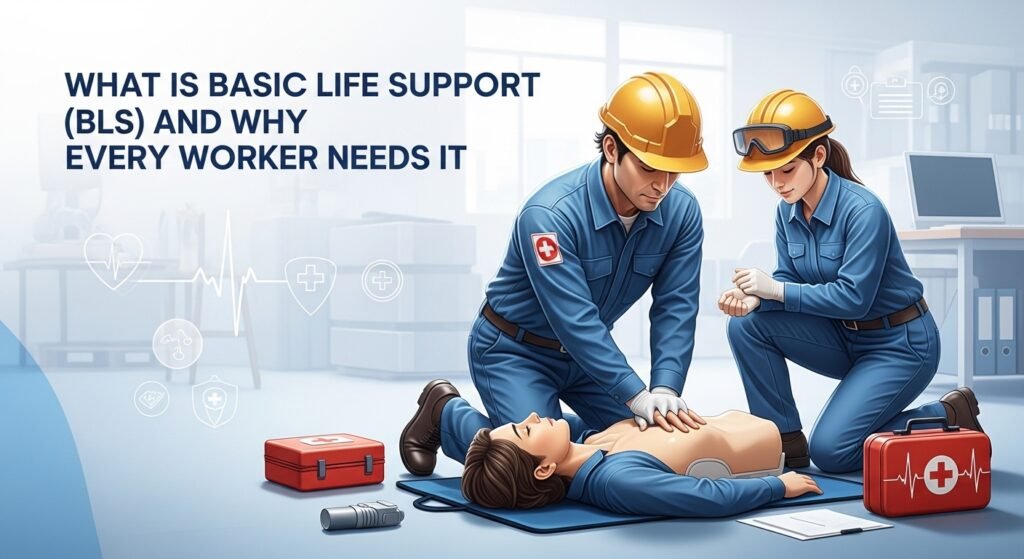
Picture this: a colleague suddenly collapses at their workstation. No warning. No obvious cause. Just a person on the floor, unresponsive, while everyone around them freezes. This happens more often than most people realize. Cardiac emergencies can strike anyone, anywhere — and the workplace is no exception. The difference between survival and tragedy often comes down to one thing: whether someone nearby knows what to do in those first few minutes. That’s exactly what Basic Life Support is about. What is Basic Life Support (BLS)? Basic Life Support — commonly called BLS — is a set of emergency medical skills designed to keep a person alive when their heart or breathing has stopped. It covers CPR (cardiopulmonary resuscitation), using an AED (automated external defibrillator), and clearing a blocked airway. BLS isn’t just for doctors or paramedics. It’s designed for anyone willing to learn. The goal is simple: bridge the gap between when an emergency happens and when professional medical help arrives. Those few minutes are critical. According to the American Heart Association (AHA), bystander CPR can double or even triple a person’s chance of survival after cardiac arrest. Yet in most workplaces, the majority of employees have never received any formal training. That’s a problem worth solving. The BLS Chain of Survival: Why Each Link Matters Emergency medicine professionals use a concept called the Chain of Survival to describe how lives are saved in cardiac emergencies. Think of it as a series of actions that must happen quickly and in order. The chain includes: If any link breaks, survival chances drop significantly. BLS training focuses on the first three — the steps ordinary people can take before emergency services arrive. What Does BLS Training Cover? A standard BLS course — particularly the AHA BLS certification — typically runs four to five hours. It’s hands-on, practical, and built around real scenarios. Here’s what participants usually learn: Training uses sensor-equipped manikins that give real-time feedback on compression depth and rate. That kind of immediate correction is what makes the difference between training that sticks and training that fades. Are BLS and CPR the Same Thing? This is one of the most common questions people ask — and it’s a fair one. CPR (cardiopulmonary resuscitation) is actually a component of BLS, not the same thing. BLS is the broader skill set that includes CPR alongside AED use, airway management, and choking relief. Think of it this way: CPR is one tool in the BLS toolkit. BLS is the full kit. When someone asks for “BLS certification,” they’re typically asking about the full certification that includes CPR and several related skills. When employers — especially in healthcare — say BLS is required, they mean the whole package. Why Workplace BLS Training Isn’t Optional Anymore Some industries have already made BLS training mandatory. Healthcare workers — nurses, surgical technicians, emergency responders — are often required to hold a current BLS certification to maintain their jobs. The AHA lists BLS as one of the top skills for healthcare roles through 2026. But this isn’t only a healthcare conversation. Manufacturing plants, construction sites, corporate offices, schools — cardiac events can happen anywhere. A coworker with a heart condition. A client who collapses during a meeting. A sudden choking incident in the break room. HR managers and safety officers are increasingly recognizing that BLS-trained staff reduce liability, improve emergency response times, and contribute to a healthier workplace culture overall. In many regions, having a minimum number of trained first aiders on-site is a regulatory requirement — not a recommendation. In Saudi Arabia and the wider KSA region, demand for BLS training is growing fast, particularly as organizations align with international standards and healthcare sector expansion continues under Vision 2030. AHA BLS certification is widely recognized and accepted across healthcare and corporate environments. The Real Cost of Not Having BLS-Trained Staff Here’s something HR managers and safety officers should consider carefully. When a cardiac emergency happens and no one nearby knows what to do, the outcome is often preventable death or serious injury. Beyond the human cost, organizations face potential legal exposure, operational disruption, and lasting damage to workplace culture. BLS training, by contrast, is relatively affordable and time-efficient. A four-to-five-hour course. Recertification every two years. A skill that once learned, stays with a person for life. Compare that to the alternative, and the choice becomes straightforward. How AED Devices Fit Into BLS Training An AED is a portable device that analyzes a person’s heart rhythm and delivers an electric shock if needed to restore normal function. Modern AEDs are designed for non-medical users — they provide audio and visual instructions, so anyone who’s been trained can use one effectively. Key points about AED use: AEDs should be placed in clearly marked, accessible locations across workplaces. Every employee should know where the nearest AED is — even if only trained staff are expected to operate it. How to Get BLS Certified: What to Expect BLS certification is available through several routes depending on your location and schedule: In-person courses offer the most hands-on experience and are ideal for teams. Instructors provide direct feedback during manikin practice. Blended or hybrid courses combine online learning with a shorter in-person skills session — useful for people with busy schedules. Online-only courses work for knowledge refreshers but typically don’t count as full certification without a hands-on component. For those seeking BLS training in Saudi Arabia, AHA-authorized providers offer courses that meet international standards and are recognized by most healthcare employers. Certification is typically valid for two years, after which recertification is required. If you’re responsible for a team, group training sessions can be arranged on-site — often at reduced cost per participant and with scheduling flexibility. BLS Training Tips for Safety Officers and HR Teams If you’re planning to introduce or expand BLS training in your organization, here are a few things worth keeping in mind: One common mistake organizations make is treating BLS training as a one-time checkbox rather than an
OSHA 10 vs OSHA 30: Which Safety Training Do You Actually Need?
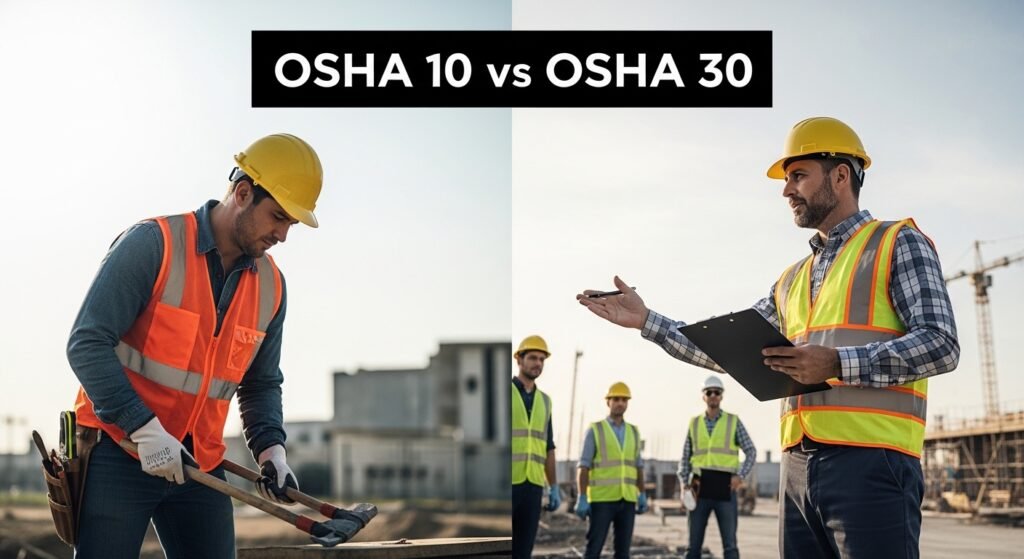
You just landed a construction job, and your boss says, Get your OSHA card. But which one? The 10-hour? The 30-hour? Does it even matter? If you’re standing at this crossroads, you’re not alone. Every year, thousands of workers face the same question. The difference between OSHA 10 and OSHA 30 isn’t just about time—it’s about your role, your career goals, and what you’ll actually do on the job. Let’s break down what these trainings actually cover, who needs which one, and how to make the smartest choice for your situation. What Is OSHA Training Anyway? Before comparing the two, here’s the foundation: OSHA (Occupational Safety and Health Administration) runs an Outreach Training Program that teaches workers how to recognize hazards and stay safe on construction sites and in general industry workplaces. These aren’t mandatory federal requirements for all workers. Instead, employers often require them, and some states make them mandatory for certain jobs. Think of them as safety education that proves you know the basics—or the advanced stuff—of workplace protection. Both programs give you a Department of Labor (DOL) card after completion. That card shows employers you’ve been trained, but it’s not technically a “certification”—it’s proof of training completion. OSHA 10: The Foundation for Frontline Workers The OSHA 10-hour course is designed for entry-level workers who spend their days on job sites doing the actual hands-on work. What You’ll Learn: The course covers fundamental hazard recognition across 6-7 mandatory hours, including: The remaining hours cover elective topics chosen by your instructor, like scaffolding safety or hand tool hazards. Who Should Take OSHA 10? This training makes sense if you’re: For example, if you’re framing houses, running electrical wire, or operating basic equipment, OSHA 10 gives you the awareness to spot risks before they become accidents. The Reality Check: OSHA 10 won’t make you a safety expert. You’ll know enough to protect yourself and recognize when something feels wrong, but you won’t learn to manage safety programs or conduct inspections. It’s awareness training, not leadership development. One common frustration: the course takes about two full workdays (you can only complete 7.5 hours per day maximum), and you must finish within 6 months of starting. OSHA 30: Deep Dive for Supervisors and Safety Leaders The OSHA 30-hour course triples your training time—and dramatically expands what you learn. What Makes It Different? OSHA 30 includes everything in OSHA 10, then goes much deeper. You’ll cover: The extra 20 hours aren’t just “more of the same.” They shift focus from personal awareness to team management and regulatory compliance. Who Benefits Most from OSHA 30? This course is built for: If you’re the person checking scaffolding before your crew uses it, running safety meetings, or documenting near-misses, OSHA 30 gives you the knowledge base you need. A Real-World Example: Imagine you’re promoted from carpenter to crew lead. Suddenly you’re not just keeping yourself safe—you’re responsible for ensuring five other workers follow protocols, use PPE correctly, and understand site-specific hazards. OSHA 30 prepares you for those conversations and decisions OSHA 10 simply doesn’t address. The Commitment Required: OSHA 30 typically takes 3-4 days to complete, whether online or in-person. That’s a significant time investment, and some workers wonder if it’s worth it. The answer depends entirely on your role. For supervisors, it’s often non-negotiable. For entry-level workers, it’s usually overkill. The Key Differences Side-by-Side Here’s how they stack up in practical terms: Aspect OSHA 10 OSHA 30 Duration 10 hours (about 2 days) 30 hours (about 3-4 days) Target Audience Entry-level workers, laborers, crew members Supervisors, foremen, safety personnel Content Depth Basic hazard awareness and worker rights Comprehensive safety management and regulatory knowledge Cost Range Generally $60-$80 Typically $200-$300 Who Requires It Often mandated by employers or states for job site access Usually required for supervisory positions Does OSHA 30 Cover Everything in OSHA 10? Yes, completely. OSHA 30 includes all the content from OSHA 10, plus the additional 20 hours of advanced material. This means if you complete OSHA 30, you don’t need OSHA 10—it’s fully covered. Some workers worry they need both cards. You don’t. OSHA 30 serves as a complete substitute for OSHA 10 requirements. Do You Need OSHA 10 Before Taking OSHA 30? No prerequisites exist for either course. You can jump straight into OSHA 30 if it suits your role, even as a complete beginner. However, most workers follow this natural progression: That said, if you know you’re headed toward management, starting with OSHA 30 saves time and money versus taking both separately later. When OSHA 30 Is Actually Worth It Let’s be honest about value. OSHA 30 costs more and takes more time. Here’s when that investment pays off: You’re Already in or Moving Toward Leadership: If you supervise others, OSHA 30 isn’t optional—it’s essential. The deeper regulatory knowledge and management focus directly apply to your daily responsibilities. Your Resume Needs a Boost: For job seekers targeting safety coordinator, foreman, or project manager roles, OSHA 30 signals serious commitment. It shows employers you understand both worker safety and management accountability. Your Employer Requires It: Some companies mandate OSHA 30 for anyone in a supervisory track. Check your company’s requirements before enrolling. When OSHA 10 Is Enough: If you’re working as a laborer, operator, or crew member with no supervisory duties, OSHA 10 covers what you need. The extra 20 hours won’t change your daily work or significantly boost your earning potential in non-leadership roles. OSHA Training Levels: What About OSHA 40? Occasionally, you’ll hear about “OSHA 40” or wonder about additional levels. Here’s the clarification: OSHA’s Outreach Program only offers 10-hour and 30-hour courses. There’s no official “OSHA 40” in this program. When people mention 40-hour training, they’re usually referring to specialized programs like HAZWOPER (Hazardous Waste Operations and Emergency Response), which is a completely different training focused on handling hazardous materials. The progression is simple: Don’t overthink it. For most construction and general industry workers, the choice is between 10 and 30 based on your role. Practical