


Contents
- 1 What First Aid Certifications Do Aramco Vendors Need?
- 2 How Many First Aiders Must Be Present on Aramco Work Sites?
- 3 What First Aid Equipment Standards Must Vendors Meet?
- 4 How Do Aramco HSE Requirements Impact Vendor Compliance?
- 5 What Are the Best Practices Beyond Minimum Requirements?
- 6 Aramco First Aid Requirements: Key Standards and Recommendations
- 7 Frequently Asked Questions
- 7.1 What first aid certification is required for Aramco vendors in Saudi Arabia?
- 7.2 Do Aramco contractors need BLS certification for all workers?
- 7.3 How many first aiders are required on Aramco sites in Saudi Arabia?
- 7.4 How often do first aid certifications need renewal for Aramco compliance?
- 7.5 What happens if an Aramco vendor fails first aid compliance audits?
- 8 Conclusion
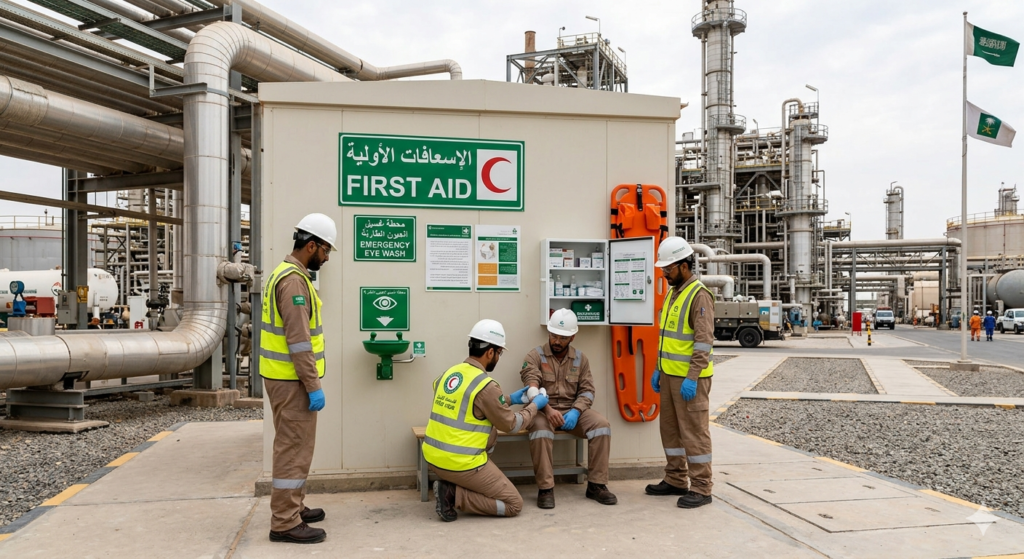
Working as a vendor or contractor for Saudi Aramco means adhering to some of the strictest safety standards in the oil and gas industry. First aid readiness isn’t optional. It’s a mandatory part of your HSE compliance package. Whether you’re managing a construction crew, supervising industrial operations, or providing support services, understanding these requirements protects your workers and keeps your contract active.
The consequences of non-compliance can be severe. You risk project shutdowns, financial penalties, and potential contract termination. More importantly, inadequate first aid preparedness puts lives at risk in environments where accidents can happen quickly. Saudi Aramco’s comprehensive safety framework exists because the stakes are genuinely high in industrial settings.
Getting compliant starts with knowing exactly what Aramco expects from you. This guide breaks down the specific first aid requirements, certification standards, equipment needs, and practical steps to maintain compliance across your operations.
TL;DR: Aramco vendors must provide certified first aiders, maintain properly stocked first aid kits (10 units for sites under 50 workers, 36 units for larger sites), and ensure medical personnel hold valid BLS and first aid certifications. All requirements stem from Saudi Aramco GI 150.002 and government regulations (Saudi Aramco GI 150.002, 2024).
What First Aid Certifications Do Aramco Vendors Need?
Saudi Aramco requires specific certifications that meet international standards and local regulations. Your personnel must hold valid, recognized credentials that prove they can respond effectively in medical emergencies. The two primary certifications are Standard First Aid (SFA) and Basic Life Support (BLS).
Organizations like EUTC Global deliver Aramco-compliant training programs designed specifically for industrial environments in Saudi Arabia. These courses cover everything from basic wound care to cardiac emergencies, giving your team the skills needed for real-world situations.
According to Aramco LPD Safety and Medical Standards, male nurses working in contractor clinics must hold both BLS certification and First Aid certification (Aramco LPD Safety and Medical Standards document, 2024). This dual requirement ensures medical staff can handle both basic injuries and serious cardiac events.
The same standards apply to ambulance drivers operating on Aramco sites. They must maintain current BLS certification and First Aid certification (Aramco LPD Safety and Medical Standards document, 2024). This makes sense when you consider that ambulance drivers often serve as first responders before patients reach medical facilities.
Saudi Aramco’s Health Education Unit provides SFA/BLS Heartsaver CPR training through qualified instructors (Saudi Aramco GI 150.002, 2024). However, vendors often use approved external training providers to certify their workforce before entering Aramco facilities. Certifications typically remain valid for two years. You need to track expiration dates carefully and schedule renewal training well before certificates lapse. Expired certifications mean non-compliant personnel, which can halt work immediately.
BLS certification courses are essential for medical personnel and recommended for supervisors who oversee high-risk operations. The training focuses on CPR techniques, automated external defibrillator (AED) usage, and managing choking emergencies.
How Many First Aiders Must Be Present on Aramco Work Sites?
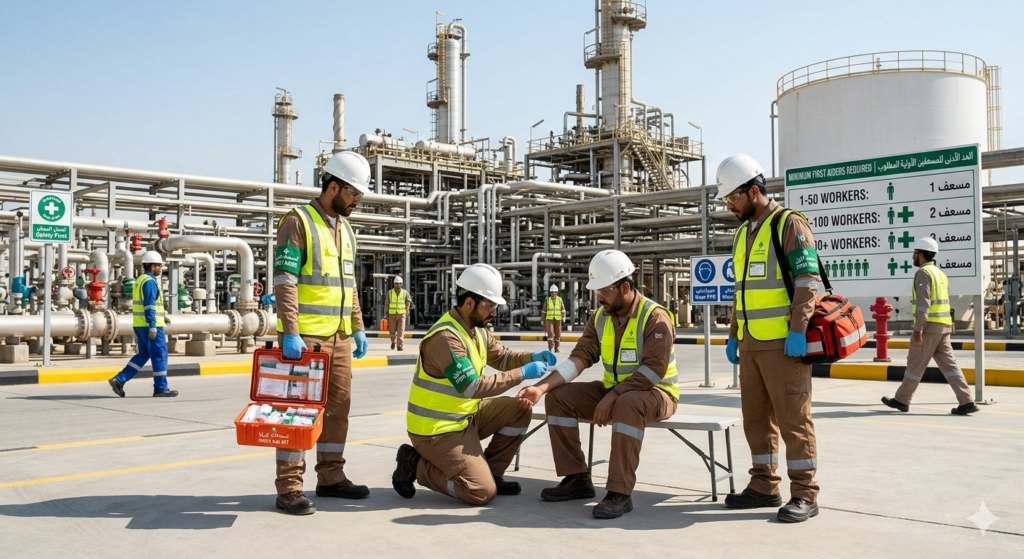
The number of certified first aiders required depends on your workforce size, shift patterns, and risk assessment. While Aramco doesn’t publish a universal ratio that applies to every situation, best practice suggests having at least one certified first aider per 50 workers during active operations.
For smaller teams, you still need at least one qualified first aider present during all working hours. This becomes more complicated when running multiple shifts. Each shift requires its own first aid coverage, meaning you can’t rely on a single certified person to cover 24-hour operations.
High-risk activities demand additional first aid presence. If you’re conducting hot work, working at heights, or operating heavy machinery in confined spaces, consider increasing your first aider ratio. The goal is ensuring someone can respond within minutes, not waiting for help to arrive from another location.
Site supervisors should also pursue first aid training even if they’re not designated as primary responders. This creates redundancy and ensures leadership can act immediately during emergencies. It’s a practical investment that pays off when seconds matter.
Our insight: Companies that exceed minimum requirements often report better safety culture and faster incident response times. Having more trained personnel creates a safety-first mindset that reduces accidents before they happen.
Documentation matters just as much as having trained personnel. You must maintain current records of all certified first aiders, including their certification dates, expiration dates, and training provider details. Aramco auditors will request these documents during compliance checks.
Create a visible system that identifies first aiders on site. This might include badges, vest markings, or posted lists near work areas. Workers need to know who to find during emergencies without wasting time.
What First Aid Equipment Standards Must Vendors Meet?
Saudi Aramco mandates specific first aid kit requirements based on worksite size and government regulations. These aren’t suggestions. They’re binding requirements that get verified during safety inspections and audits.
For work sites with fewer than 50 workers, you must provide a First Aid Kit containing 10 units (Saudi Aramco GI 150.002, 2024). The term “units” refers to specific medical supplies outlined in Saudi government standards, including bandages, antiseptics, gauze, scissors, gloves, and basic medications.
Sites with 50 or more workers require a significantly larger First Aid Kit of 36 units (Saudi Aramco GI 150.002, 2024). This expanded kit includes additional supplies needed to handle multiple casualties or more serious injuries until professional medical help arrives.
The requirement for first aid kits at all Aramco work sites stems from Saudi Government Decision No. 404 (Saudi Aramco GI 150.002, 2024). This government mandate ensures consistent safety standards across all industrial operations in the Kingdom.
First aid kits must be easily accessible, clearly marked, and protected from environmental damage. Heat, dust, and humidity can degrade medical supplies quickly in Saudi Arabia’s climate. Store kits in temperature-controlled areas when possible and inspect them regularly.
Supplier safety checklists explicitly include first aid equipment and supplies compliance as a verification point (Saudi Aramco Material Supplier Guide, 2020). This means your procurement and logistics teams need to understand these requirements just as thoroughly as your safety managers.
Beyond basic kits, consider additional equipment based on your specific operations. Eye wash stations are essential for chemical handling areas. Stretchers and spine boards are important in construction zones. AEDs should be available in larger camps or facilities where cardiac emergencies pose realistic risks.
Monthly inspections of first aid equipment are standard practice. Check expiration dates, replace used items immediately, and ensure kits remain fully stocked. Assign responsibility for kit maintenance to specific personnel rather than assuming someone will handle it.
How Do Aramco HSE Requirements Impact Vendor Compliance?
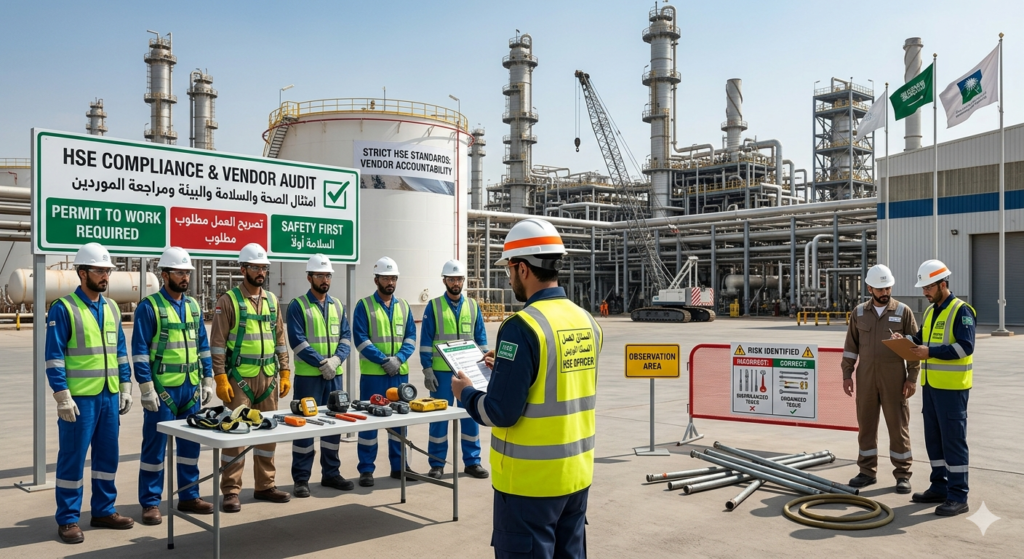
Aramco’s Health, Safety, and Environment (HSE) framework establishes comprehensive standards that go beyond basic first aid. These requirements form the foundation of your entire safety management system as a vendor or contractor.
Your HSE plan must demonstrate how you’ll maintain first aid readiness throughout the project lifecycle. This includes staffing plans showing certified first aiders on each shift, equipment procurement schedules, training timelines, and emergency response procedures.
Compliance isn’t a one-time checkbox. Aramco conducts regular audits, surprise inspections, and ongoing monitoring of vendor safety performance. Poor first aid compliance contributes to overall HSE ratings that affect your ability to win future contracts.
The connection between first aid preparedness and incident response protocols is direct. Your emergency response plan must specify how first aiders will be notified, where medical equipment is located, evacuation routes to medical facilities, and communication procedures with Aramco medical services.
Many vendors underestimate the documentation burden. You’ll need detailed records of training sessions, equipment inspections, incident reports, near-miss investigations, and corrective actions. Digital systems that track certifications and automate alerts for expiring credentials can save significant administrative time.
Integration with Aramco’s safety reporting systems is often required. When incidents occur, you must report them through specified channels within defined timeframes. First aid treatment, even for minor injuries, typically requires documentation and reporting.
Our insight: Vendors who treat HSE compliance as an integrated business system rather than a separate safety department responsibility consistently outperform competitors. When everyone understands their role in maintaining safety standards, compliance becomes sustainable.
Pre-qualification requirements for new vendors always include first aid and medical capabilities. Before you can bid on projects, you must demonstrate existing safety infrastructure, trained personnel, and proven compliance history. Building these capabilities takes time, so start well before pursuing Aramco contracts.
What Are the Best Practices Beyond Minimum Requirements?
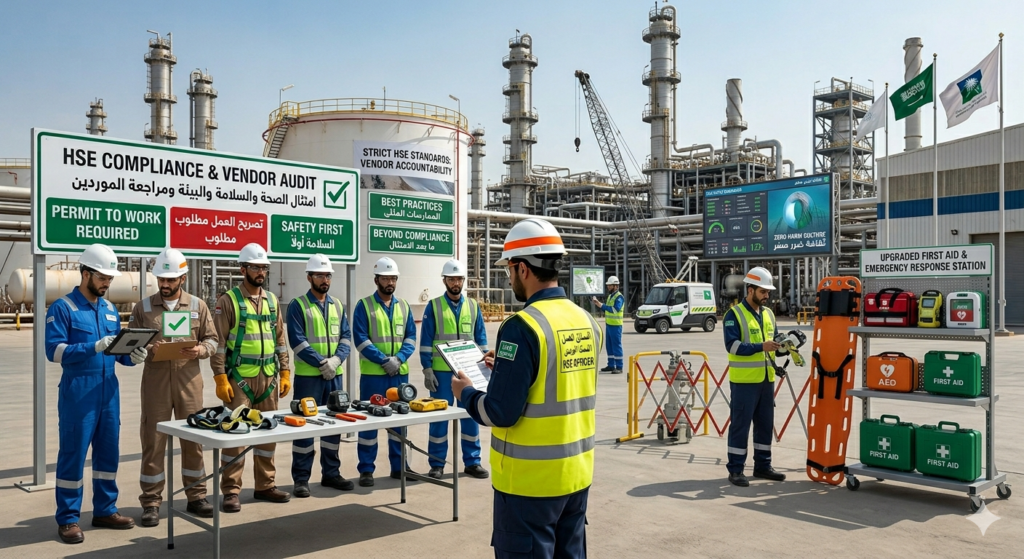
Meeting minimum standards keeps you compliant. Exceeding them builds competitive advantage and genuinely protects your workforce. Smart contractors view safety investments as business enablers, not costs.
Consider providing advanced first aid training for supervisors and team leaders. Advanced courses cover trauma management, environmental emergencies like heat stroke, and extended care scenarios where professional medical help is delayed.
Conduct regular first aid drills that simulate realistic scenarios. Practice evacuations, communication procedures, and handoffs to emergency medical services. These exercises reveal gaps in your plans and build muscle memory for your response teams.
Establish a medical services relationship before you need it. Know which hospitals and clinics serve the area around your work sites. Understand their capabilities and typical response times. Pre-register your company and brief their emergency departments about the types of injuries they might see from your operations.
Language barriers create real challenges in Saudi Arabia’s multicultural workforce. First aid training and emergency procedures should be available in the languages your workers actually speak. Critical safety information in English alone leaves many workers unable to respond effectively.
Technology can enhance first aid capabilities. Mobile apps that provide step-by-step first aid guidance, digital systems that track certified personnel locations, and telemedicine connections to doctors for guidance during complex situations all add value.
Regular refresher training between formal certification cycles keeps skills sharp. Short toolbox talks covering specific first aid topics, practical demonstrations, and scenario discussions maintain awareness and competence.
Wellness programs that address preventable health issues reduce the need for emergency first aid. Heat stress prevention, proper hydration, nutrition support, and fatigue management all contribute to a healthier workforce that experiences fewer medical emergencies.
Benchmark your performance against industry standards and top performers. Track metrics like incident rates, response times, and audit scores. Use this data to identify improvement opportunities and demonstrate your commitment to continuous safety enhancement.
Aramco First Aid Requirements: Key Standards and Recommendations
| Requirement Category | Aramco Minimum Standard | Recommended Best Practice |
|---|---|---|
| First Aid Kit (Under 50 Workers) | 10 units required | 15+ units with specialized supplies for site hazards |
| First Aid Kit (50+ Workers) | 36 units required | 40+ units plus backup kits in remote areas |
| Certified First Aiders | Based on site assessment | Minimum 1 per 50 workers, 1 per shift |
| Medical Personnel Certification | BLS + First Aid required | Advanced trauma certification recommended |
| Ambulance Driver Certification | BLS + First Aid required | Advanced First Aid + defensive driving |
| Certificate Validity | Must be current | Renewal scheduled 3 months before expiration |
| Equipment Inspection | As required by standards | Monthly documented inspections |
| Training Documentation | Records must be maintained | Digital tracking system with automated alerts |
| Emergency Response Plan | Required for all sites | Quarterly drills with documented lessons learned |
| AED Availability | Risk assessment based | Recommended for sites over 100 workers |
This table provides a practical comparison between meeting minimum compliance and implementing best practices. Many successful vendors start with minimum requirements and systematically update their programs as they gain experience and resources.
The gap between minimum and recommended standards represents an opportunity to differentiate your company. Safety-conscious clients notice vendors who go beyond checkboxes to create genuinely safe work environments.
Frequently Asked Questions
What first aid certification is required for Aramco vendors in Saudi Arabia?
Aramco vendors need personnel with valid Standard First Aid (SFA) and Basic Life Support (BLS) certifications. Medical staff in contractor clinics must hold both BLS and First Aid certifications (Aramco LPD Safety and Medical Standards document, 2024). Certifications from internationally recognized providers that meet Saudi standards are typically accepted. Training must cover CPR, AED usage, wound care, and emergency response protocols relevant to industrial environments.
Do Aramco contractors need BLS certification for all workers?
Not all workers require BLS certification, but specific roles do. Ambulance drivers and male nurses in contractor clinics must hold valid BLS certification (Aramco LPD Safety and Medical Standards document, 2024). However, having additional BLS-trained personnel beyond minimum requirements strengthens your emergency response capabilities. Supervisors and team leaders particularly benefit from BLS training since they often serve as first responders during incidents.
How many first aiders are required on Aramco sites in Saudi Arabia?
The required number depends on workforce size, shift patterns, and risk assessment. Best practice suggests at least one certified first aider per 50 workers during operations. Each shift needs its own first aid coverage. Sites with fewer than 50 workers still require at least one qualified first aider present during all working hours. High-risk activities may warrant additional certified personnel to ensure rapid response capability.
How often do first aid certifications need renewal for Aramco compliance?
First aid and BLS certifications typically remain valid for two years from the issue date. You must complete renewal training and recertification before your current certificates expire. Working with expired certifications constitutes non-compliance and can result in personnel being barred from Aramco sites. Establish a tracking system that alerts you at least three months before expiration dates to schedule timely renewal training.
What happens if an Aramco vendor fails first aid compliance audits?
Non-compliance can result in immediate work stoppages, financial penalties, mandatory corrective action plans, and negative impacts on your HSE performance ratings. Serious or repeated violations may lead to contract termination and disqualification from future Aramco projects. The financial and reputational costs of non-compliance far exceed the investment required to maintain proper first aid readiness. Proactive compliance protects both your workforce and your business relationships.
Conclusion
Aramco’s first aid requirements exist to protect lives in inherently risky industrial environments. Understanding and implementing these standards isn’t just about compliance. It’s about building operational excellence and demonstrating your commitment to worker safety.
The path to compliance starts with certified personnel, properly equipped work sites, and integrated safety management systems. Organizations like EUTC Global provide the training and support vendors need to meet these demanding standards.
Key takeaways for Aramco vendor compliance:
- Ensure medical personnel hold both valid BLS and First Aid certifications before deployment.
- Maintain compliant first aid kits: 10 units for sites under 50 workers, 36 units for larger sites.
- Track certification expiration dates and schedule renewal training at least three months in advance.
- Document everything from training records to equipment inspections for audit readiness.
- Integrate first aid requirements into your broader HSE management system.
- Consider exceeding minimum standards to build competitive advantage and genuinely protect your workforce.
- Establish relationships with local medical facilities before emergencies occur.
- Conduct regular drills that test your emergency response procedures under realistic conditions.
Your investment in first aid preparedness pays dividends through reduced incidents, faster emergency response, improved safety culture, and stronger relationships with Aramco. Companies that treat safety as a core business value rather than a compliance burden consistently win more contracts and retain them longer.
Start building or upgrading your first aid compliance program today. The lives you protect and the business relationships you strengthen make it one of the most important investments you’ll make as an Aramco vendor.