


Contents
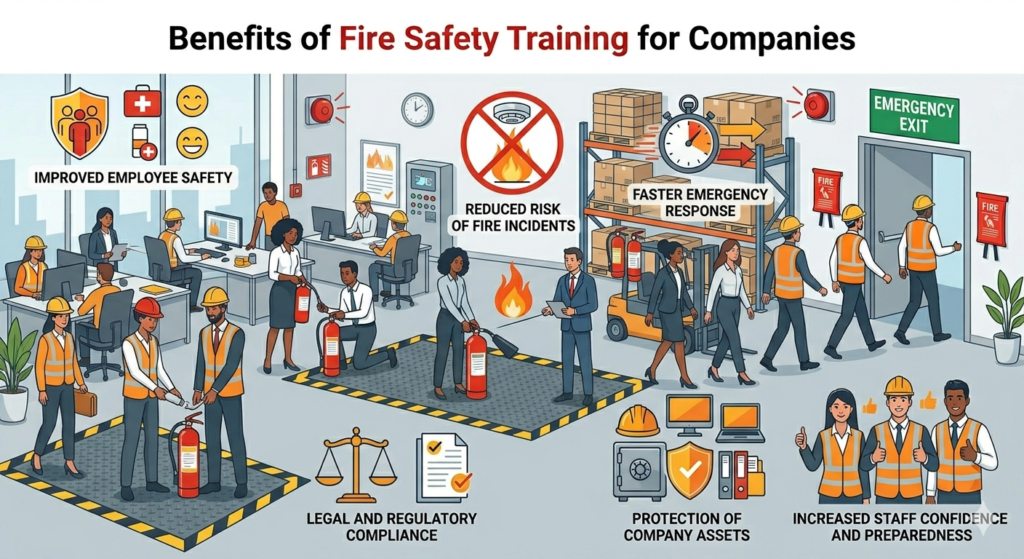
A single industrial fire can cost businesses an average of $4.5 million in damages, downtime, and repairs—excluding legal liabilities and reputational harm. Despite this, many organizations still treat fire safety training as a compliance checkbox rather than a strategic investment. In reality, it delivers measurable financial, operational, and human benefits.
Here are the five most impactful advantages of implementing structured fire safety training in your company.
1. Significant Reduction in Workplace Injuries
Fire safety training dramatically lowers the risk of employee injuries. Workplaces with structured programs report up to 82% fewer fire-related injuries.
This happens because trained employees:
- Respond quickly and correctly in emergencies
- Evacuate faster (up to 55% quicker)
- Reduce exposure to smoke, heat, and structural hazards
Beyond safety, faster evacuations also reduce operational downtime—making this both a human and financial benefit.
2. Strong Return on Investment (ROI)
Fire safety training delivers an average 4:1 ROI, meaning every dollar invested saves four dollars in avoided losses.
Savings come from
- Reduced incident damage
- Lower downtime costs
- Fewer false alarms caused by misuse of equipment
- Improved operational continuity
In high-risk industries, lack of compliance can even result in lost contracts—turning training into a direct revenue protection strategy.
3. Protection from Regulatory Fines
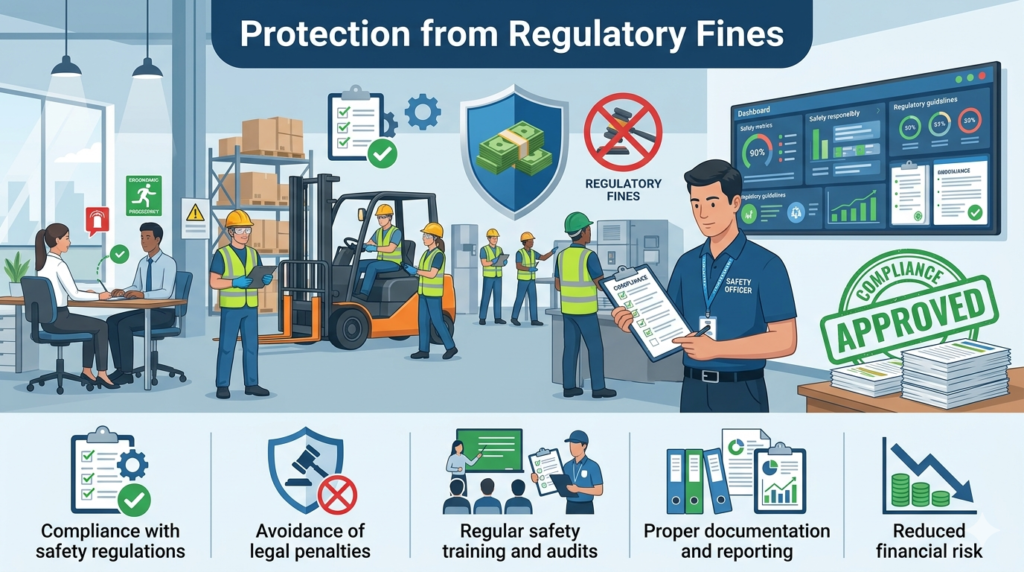
Regulatory compliance is becoming stricter, especially in high-risk sectors.
Companies that fail to meet fire safety requirements risk:
- Heavy financial penalties
- Failed safety audits
- Operational shutdowns
Common compliance failures include:
- Outdated or undocumented training
- Expired certifications
- Unqualified training providers
Regular, certified training ensures your company remains audit-ready and legally protected.
4. Lower Insurance Costs and Liability Exposure
Fire safety training has a direct impact on insurance performance.
Organizations with proper training programs benefit from:
- Up to 60% reduction in fire-related insurance claims
- Lower insurance premiums over time
- Stronger legal defense in case of incidents
Documented training records demonstrate due diligence, which can significantly reduce liability in legal or insurance disputes.

5. Improved Employee Confidence and Retention
Workplace safety directly influences employee morale and retention—especially in high-risk industries.
Fire safety training:
- Increases employee confidence in handling emergencies
- Reduces anxiety related to workplace hazards
- Improves overall job satisfaction
Employees who feel safe are 20–30% less likely to leave, reducing recruitment and onboarding costs.
Key Takeaways
Fire safety training is not just a compliance requirement—it’s a high-impact business investment.
Core benefits include:
- 82% fewer workplace injuries
- 4:1 return on investment
- Reduced regulatory risk and fines
- Lower insurance claims and premiums
- Improved employee retention and morale
What to Do Next
To maximize these benefits:
- Audit your current fire safety training records
- Verify certifications and compliance status
- Ensure training is hands-on and regularly updated
- Use accredited and recognized training providers
A well-implemented fire safety program protects your people, your operations, and your bottom line.