


Basic Firefighting Training: What to Expect in Your Course
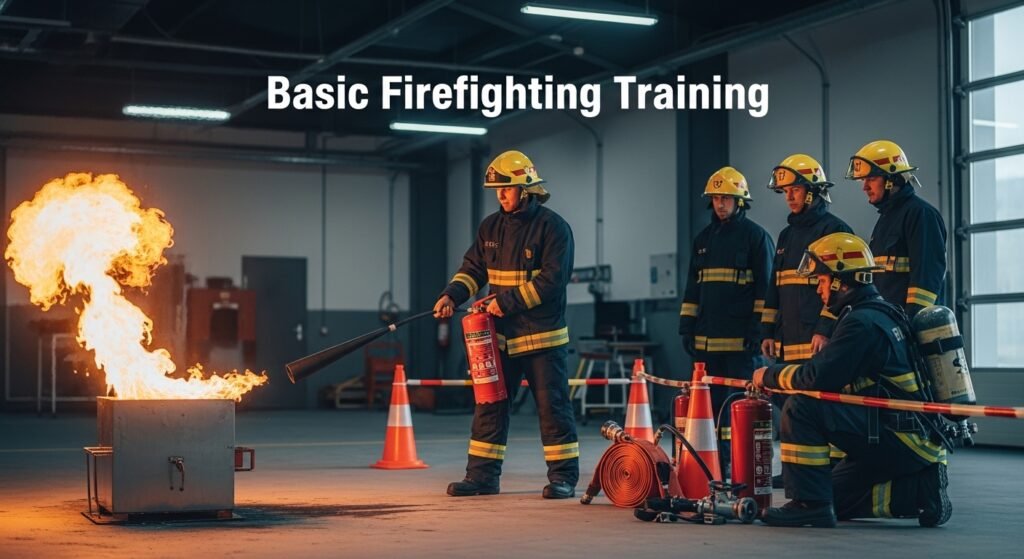
Whether you’re responding to a job posting, attending a recruiter session, or simply feeling drawn to a more meaningful career — one question comes up every time: what actually happens in a firefighting training course? This guide covers everything you need to know before enrolling — from curriculum and certification requirements to costs, physical prep, and free resources. What Is Basic Firefighting Training? Basic firefighting training is a structured, hands-on program that teaches you how to safely suppress fires, rescue civilians, and operate effectively as part of a team. Most U.S. programs follow the NFPA 1001 standard (National Fire Protection Association — Firefighter Professional Qualifications), which ensures a consistent national benchmark for skills and safety. Course lengths vary by goal: What You’ll Learn: Core Curriculum Breakdown 1. Fire Behavior and the Fire Tetrahedron Every firefighting course starts here. You’ll study the fire tetrahedron — the four elements fire needs to survive: Understanding how fires grow, how flashover occurs, and how fires behave in enclosed spaces helps you make safer, faster decisions on scene. 2. Fire Extinguisher Types and Fire Classes Not all fires are the same — and using the wrong extinguisher can make things worse. You’ll memorize all five fire classes: Class Fire Type Example A Ordinary combustibles Wood, paper B Flammable liquids Gasoline, oil C Electrical fires Wiring, appliances D Combustible metals Magnesium, titanium K Cooking oils/fats Commercial kitchens 3. SCBA Training for Firefighters SCBA (Self-Contained Breathing Apparatus) is the air tank and mask system that keeps you breathing inside a burning structure. Training covers: Many students are surprised by how different it feels to breathe through an SCBA while their heart rate is elevated. Programs build in repetitions until it becomes second nature. 4. Fire Suppression Techniques This is the hands-on core of your training. You’ll learn: Some programs include wildland fire modules following NFPA 1051 — covering brush, forest, and open-terrain firefighting, which requires a separate skill set from structural respons 5. Hazmat Awareness You won’t become a hazmat specialist in a basic course, but you will learn to: 6. Search, Rescue, and Basic EMS Firefighters respond to more than fires. Your course covers: How Long Does Firefighting Training Take? Program Type Approximate Hours Typical Duration Workplace fire safety 8–16 hrs 1–2 days Volunteer firefighter basic 32–40 hrs 2–3 weekends Firefighter I certification 200–250 hrs 10–14 weeks Full fire academy (FF I & II) 400–428 hrs 4–6 months Career recruit academy Up to 1,500 hrs Up to 9 months Physical Fitness: The CPAT Test Firefighting is physically demanding — and your training will reflect that. Most career academies require you to pass the CPAT (Candidate Physical Ability Test) before or during enrollment. The CPAT includes 8 events wearing a weighted vest: Start preparing at least 3 months before your course. Focus on: Failing the CPAT is one of the most common reasons applicants don’t advance — don’t wait to start training. Live Fire Training: Where It All Comes Together Near the end of your program, you’ll enter a live burn structure — a controlled building where instructors set real fires for you to suppress. What to expect: Most graduates describe live fire training as the defining moment of their course. It’s where theory becomes instinct. Certification Requirements After completing your course, you’ll sit for: Successful completion earns you a Firefighter I or Firefighter II certification, issued by your state fire authority. Before enrolling, most academies require: Note: Full certification requires in-person skills testing. Online-only programs cover theory but cannot replace the hands-on component. Cost of Firefighting Training Program Estimated Cost Free online (NFA, NWCG) $0 Community college fire academy $300–$800 Private fire academy $1,500–$2,000+ Gear and textbooks (e.g., IFSTA Essentials) $150–$400 Ways to reduce cost: Free Basic Firefighting Training Resources You don’t need to spend money to get started. Several legitimate free options exist: These don’t replace a full certification — but they build your knowledge base, reduce prep time in paid programs, and some count as formal prerequisites. Volunteer Firefighting: A Smart Starting Point If a full academy feels out of reach right now, consider the volunteer firefighter route: Many career firefighters started as volunteers — it’s not a lesser path, it’s often the smarter one. What Makes a Strong Firefighting Student? Instructors aren’t looking for superheroes. They’re looking for people they’d trust in a burning building. That means students who: Your Next Steps: How to Get Started FAQ’s
CPR vs BLS: What’s the Difference and Which Certification Do You Need?
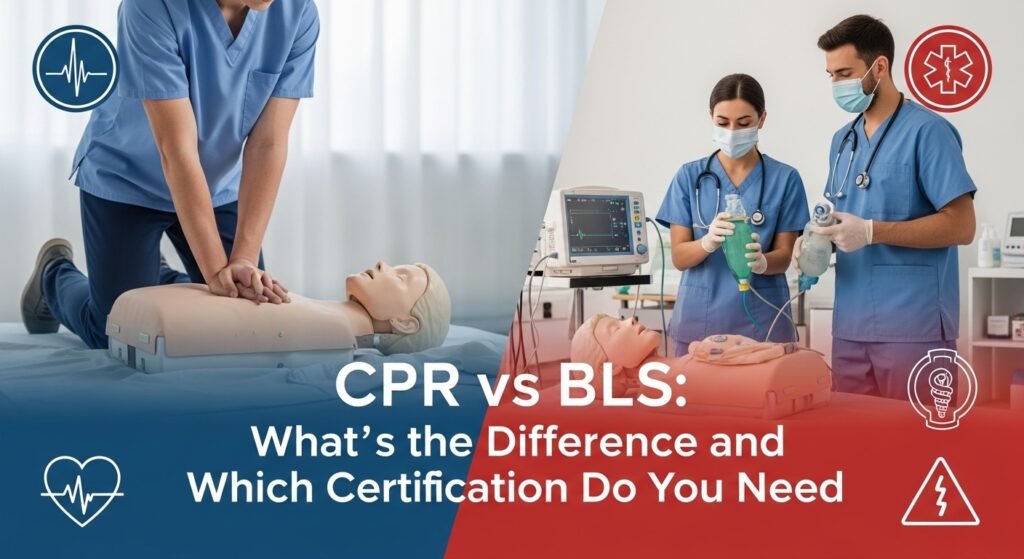
You’re applying for a nursing position, and the job posting says “BLS certification required.” But you already have a CPR certificate sitting in your drawer. Are they the same thing? Can you just submit that? This is one of the most common points of confusion in healthcare and workplace safety training. Getting it wrong can delay your hiring, block your clinical placement, or leave you underprepared in an actual emergency. The short answer: CPR and BLS are related but not the same. One is designed for the general public. The other is built for healthcare professionals who need to perform under pressure, in teams, with clinical tools. This guide breaks down exactly what each certification covers, who needs which one, what they cost, how long they’re valid, and how to choose the right path for your career or workplace. What Is CPR, Really? CPR (cardiopulmonary resuscitation) is a physical technique that uses chest compressions and rescue breathing to keep blood and oxygen moving in someone whose heart has stopped beating. Most people learn CPR in a few hours. The typical CPR certification course covers: In Canada, CPR Level C with AED is the most common standard for workplaces, schools, and general community settings. It’s valid for 3 years and can often be completed through blended online and in-person formats. CPR is designed for lay responders — a teacher, a security guard, a parent — someone who happens to be nearby when a person collapses, without clinical training. What Is BLS (Basic Life Support)? BLS (Basic Life Support) is CPR’s more advanced, clinically focused equivalent. It was developed specifically for healthcare providers — nurses, doctors, paramedics, dentists, and respiratory therapists — who respond to emergencies in structured medical settings. A BLS provider course typically covers: BLS is offered through the Heart & Stroke Foundation and the Canadian Red Cross. As of 2025, it is the standardized requirement across Ontario, Nova Scotia, and most Canadian provinces for clinical placements and healthcare employment. Important: BLS must be completed in person. There is no fully online BLS option. BLS certification is valid for 1 year, with annual renewal required. CPR vs BLS: Side-by-Side Comparison Here is a clear breakdown of how the two certifications compare across the areas that matter most. Feature CPR (Level C + AED) BLS (Basic Life Support) Target audience General public, non-clinical workers Healthcare professionals, clinical staff Chest compressions Yes Yes (high-performance focus) Rescue breathing Basic Advanced (BVM included) AED use Yes Yes Pulse check No Yes Bag-valve-mask (BVM) No Yes 2-rescuer technique Rarely Yes Team dynamics training No Yes Online option Blended formats available In-person only Certification validity 3 years 1 year Typical course duration 4-8 hours 4-7 hours Average cost $50-$100 CAD $80-$150 CAD Required for clinical roles Generally not accepted Mandatory WSIB workplace compliance Yes (non-clinical) Yes (clinical/high-risk) The Real Difference in Practice Consider a patient who goes into cardiac arrest in a hospital hallway. Within seconds, two nurses and a respiratory therapist respond. One nurse starts chest compressions. The second takes over the airway with a BVM. The therapist calls for the crash cart and manages team communication. That coordinated response — role assignments, BVM use, synchronized handoffs — is exactly what BLS trains for. Now imagine the same cardiac arrest in a shopping mall food court. A nearby teacher calls 911, directs a bystander to grab the wall-mounted AED, and begins compressions. That’s CPR doing its job. No BVM. No pulse checks. Just immediate action that keeps the person alive until advanced help arrives. Both are life-saving skills. They simply serve different people in different situations. Does BLS Include CPR and AED? Yes — completely. BLS builds on top of CPR rather than replacing it. If you hold a BLS certification, you have covered everything in a CPR Level C course plus the clinical additions. So if someone asks whether you know CPR, the answer is absolutely yes. The reverse is not true. A CPR certificate does not mean you have completed BLS. For clinical jobs and hospital placements, this distinction is critical. Is BLS the Same as CPR and First Aid? No. BLS focuses specifically on cardiac and respiratory emergencies — it does not cover wound care, fractures, burns, anaphylaxis management, or the broader first aid content required for workplace First Aid Attendant designations. If your workplace requires both first aid and CPR/BLS, you will likely need separate certifications or a combined course that covers both areas. Who Needs What? A Profession-by-Profession Guide Healthcare Professionals — You Need BLS If you work in a clinical environment, BLS is non-negotiable: Non-Clinical Workplaces — CPR Level C Is Your Standard First Responders and Public Safety Education and Childcare Students Entering Healthcare If you are a student in nursing, paramedicine, dentistry, or any allied health field, get your BLS before your placement begins. Most clinical programs will send you home without it. CPR vs BLS vs ACLS: Understanding the Progression CPR, BLS, and ACLS form a progression, not a competition: You cannot take ACLS without a valid BLS certification. BLS is the gateway. Cost, Duration, and Validity: What to Expect CPR Level C + AED BLS Provider Course The annual renewal requirement for BLS is a real operational consideration. Hospitals, clinics, and healthcare programs track expiry dates and require staff to renew before the card lapses. Some employers cover the cost; others require staff to self-fund. Not sure what BLS training will cost for your team or clinic? Get BLS Training Quote to find the right course and pricing for your team. A Note on Online CPR Certification You have probably seen ads for “online CPR certification” promising completion in an hour for $20. Be careful. Legitimate blended CPR courses include online theory with mandatory in-person skills testing. A purely online certificate with no hands-on component is generally not accepted by employers, WSIB, or clinical programs. For BLS, there is no recognized online-only option. When searching for “CPR certification near me” or “BLS certification near me,”
Best Fire Safety Training Courses for Professionals in Saudi Arabia
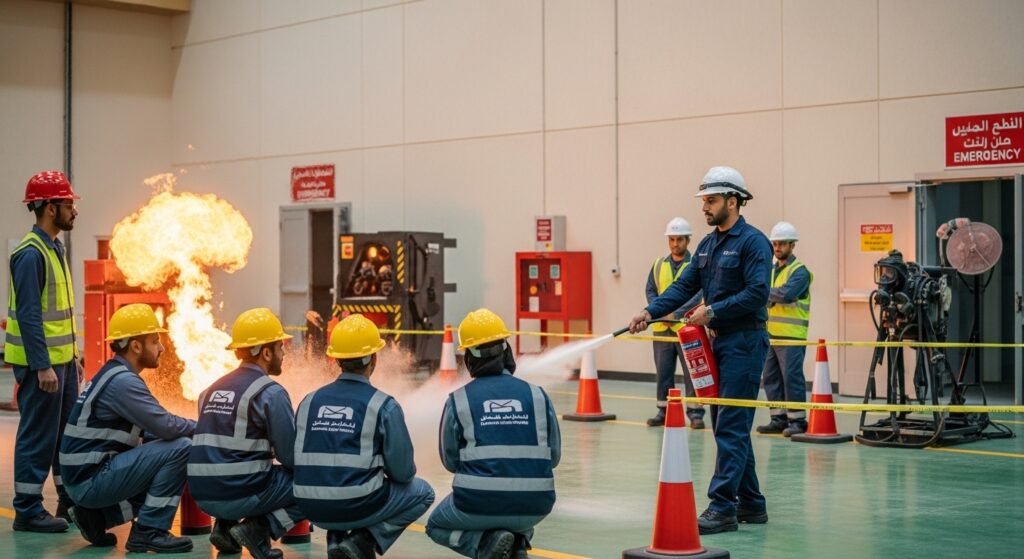
You’re working on a large construction site in Riyadh. There’s welding happening on one floor, flammable materials stored on another, and hundreds of workers going about their day. Then something goes wrong. A spark catches. Within minutes, what started as a small flame becomes a serious emergency. Who steps in? The trained safety officer. Fire safety is not a checkbox exercise in Saudi Arabia — it’s a legal requirement, a professional responsibility, and a career-defining skill. With Vision 2030 driving massive growth in infrastructure, construction, oil and gas, and hospitality, the demand for qualified professionals holding a safety officer course in Saudi Arabia has never been higher. This guide covers everything you need to know: the top fire safety training courses, leading providers, career prospects, salary expectations, and practical advice for both freshers and expatriates. Why Fire Safety Training Matters in Saudi Arabia Saudi Arabia operates in one of the world’s most hazardous industrial environments. The oil and gas sector accounts for a significant share of workplace incidents, and fire-related risks are among the most common and most devastating. According to the Saudi Civil Defense Authority, thousands of fire incidents are recorded annually across commercial, industrial, and residential settings. Workplaces involving chemical storage, heavy machinery, and confined spaces carry a particularly high risk of fire and explosion. Beyond the human cost, businesses face regulatory consequences. Saudi labor law and the General Organization for Social Insurance (GOSI) set out clear employer obligations regarding workplace safety. Companies failing to meet fire safety standards risk penalties, project shutdowns, and serious reputational damage. This is precisely why trained fire safety professionals are in demand — and why the right safety course in Saudi Arabia can open doors that were previously closed to you. Types of Fire Safety Training Available in Saudi Arabia Before choosing a course, it helps to understand what’s available. Fire safety training in Saudi Arabia generally falls into four categories: 1. Internationally Accredited Certifications These globally recognized qualifications carry significant weight with multinational employers and major Saudi contractors: 2. Local Saudi Safety Certifications Training centers in the Kingdom offer locally developed programs aligned with Saudi Civil Defense and SASO (Saudi Standards, Metrology and Quality Organization) requirements. These are particularly useful for professionals working in Saudi-owned firms or government-linked projects. 3. Short Courses and Awareness Programs Typically 1–5 day programs covering fire warden duties, evacuation planning, fire extinguisher operation, and emergency response. Ideal for non-safety staff or professionals adding a specific skill. 4. Online Safety Courses in Saudi Arabia The growth of online learning has made internationally recognized qualifications more accessible than ever. NEBOSH online courses and platform-based programs allow working professionals to study around their schedules. More on this below. Top Fire Safety Training Providers in Saudi Arabia Here are the leading organizations offering quality fire safety and HSE training across the Kingdom. Arabian Safety Training Center One of the most recognized names for safety training in Saudi Arabia, Arabian Safety Training Center offers courses from fire safety fundamentals to advanced HSE certifications. They serve professionals in Riyadh, Jeddah, and Dammam, with programs tailored to Saudi industrial requirements. Corporate training packages are also available. NEBOSH-Accredited Learning Partners Several NEBOSH-approved learning partners operate in Saudi Arabia, offering classroom and online delivery of: Providers like NIST and similar centers have strong track records for NEBOSH delivery in the region. Always verify accreditation status directly on the NEBOSH official website before enrolling. TSQC — Total Safety Courses TSQC offers a broad portfolio of safety training solutions, including fire safety, emergency response, and HSE management, catering to both individual professionals and corporate clients. OSHA-Authorized Training Organizations For professionals targeting US-linked companies, oil refineries, or international contractors, OSHA-authorized centers provide the OSHA Certificate Saudi Arabia programs, including OSHA 10 and OSHA 30 certifications. Most Popular Fire Safety and HSE Courses Explained NEBOSH Fire Safety and Risk Management This is the gold-standard qualification for fire safety specialists. It covers: Duration: 4–6 weeks (varies by study mode)Delivery: Classroom or onlineBest for: Safety officers, fire wardens, facility managers, and anyone responsible for fire risk The qualification is globally recognized and highly valued by Saudi employers in construction, oil and gas, manufacturing, and facilities management. NEBOSH IGC — International General Certificate The NEBOSH IGC is the most popular entry point into professional safety careers worldwide — and Saudi Arabia is no exception. It provides a solid foundation across workplace health and safety, including fire safety, hazard identification, risk assessment, and workplace inspections. Many employers in Saudi Arabia list NEBOSH IGC as a minimum requirement for HSE officer roles. Duration: 10–12 weeksDelivery: Classroom or onlineBest for: Safety officers at all levels, HSE supervisors, professionals transitioning into safety NEBOSH PSM — Process Safety Management For professionals in Saudi Arabia’s oil, gas, and petrochemical sectors, NEBOSH PSM is highly relevant. It focuses on managing fire, explosion, and toxic release hazards in process environments. Best for: HSE professionals, engineers, and process safety specialists in energy industries OSHA Certificate Saudi Arabia OSHA certifications are widely valued on international construction and industrial projects. The OSHA 30-hour course is widely recognized and can be completed in a few days. Duration: 10 or 30 hoursDelivery: Classroom or onlineBest for: Supervisors, safety officers, and construction professionals NEBOSH IDIP — International Diploma For those targeting senior HSE management roles, the NEBOSH IDIP is the advanced qualification. It takes longer to complete but positions you as a senior-level professional. Duration: 12–18 monthsDelivery: Classroom or onlineBest for: Experienced HSE professionals targeting management positions What Makes Good Fire Safety Training? Not all courses are equal. Quality fire safety training should include: Practical, Hands-On Components: Look for live fire extinguisher drills, evacuation simulations, and real-scenario risk assessments. Purely lecture-based courses are a red flag. Scenario-Based Learning: Real workplace case studies and incident investigations deliver lasting learning. Recognized Accreditation: Always verify your course is accredited. For NEBOSH, check the official accreditation list. For OSHA, confirm trainers are OSHA-authorized. Unaccredited courses may not be accepted by serious employers. Rigorous Assessment: Courses with meaningful assessments —
OSHA 10 vs OSHA 30: Which Safety Training Do You Actually Need?
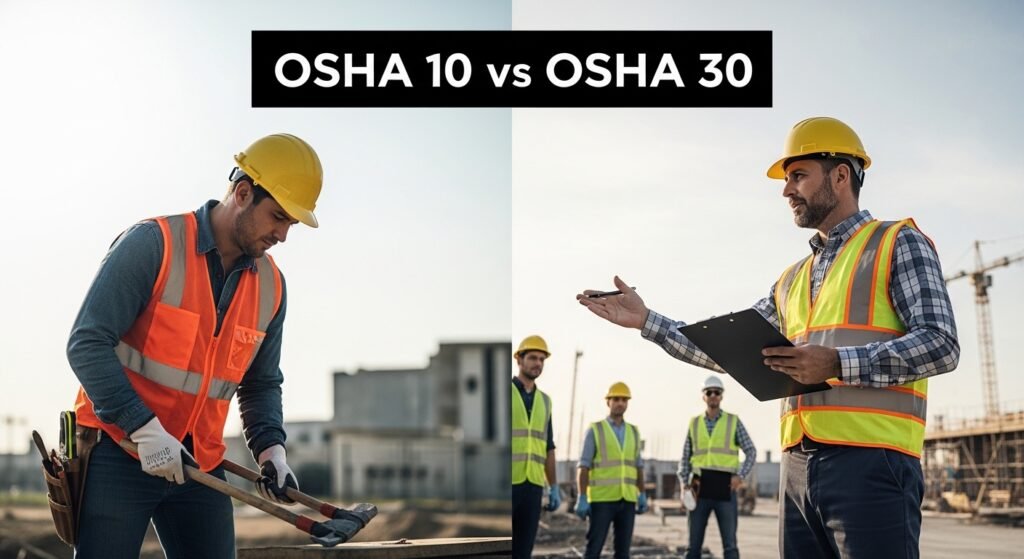
You just landed a construction job, and your boss says, Get your OSHA card. But which one? The 10-hour? The 30-hour? Does it even matter? If you’re standing at this crossroads, you’re not alone. Every year, thousands of workers face the same question. The difference between OSHA 10 and OSHA 30 isn’t just about time—it’s about your role, your career goals, and what you’ll actually do on the job. Let’s break down what these trainings actually cover, who needs which one, and how to make the smartest choice for your situation. What Is OSHA Training Anyway? Before comparing the two, here’s the foundation: OSHA (Occupational Safety and Health Administration) runs an Outreach Training Program that teaches workers how to recognize hazards and stay safe on construction sites and in general industry workplaces. These aren’t mandatory federal requirements for all workers. Instead, employers often require them, and some states make them mandatory for certain jobs. Think of them as safety education that proves you know the basics—or the advanced stuff—of workplace protection. Both programs give you a Department of Labor (DOL) card after completion. That card shows employers you’ve been trained, but it’s not technically a “certification”—it’s proof of training completion. OSHA 10: The Foundation for Frontline Workers The OSHA 10-hour course is designed for entry-level workers who spend their days on job sites doing the actual hands-on work. What You’ll Learn: The course covers fundamental hazard recognition across 6-7 mandatory hours, including: The remaining hours cover elective topics chosen by your instructor, like scaffolding safety or hand tool hazards. Who Should Take OSHA 10? This training makes sense if you’re: For example, if you’re framing houses, running electrical wire, or operating basic equipment, OSHA 10 gives you the awareness to spot risks before they become accidents. The Reality Check: OSHA 10 won’t make you a safety expert. You’ll know enough to protect yourself and recognize when something feels wrong, but you won’t learn to manage safety programs or conduct inspections. It’s awareness training, not leadership development. One common frustration: the course takes about two full workdays (you can only complete 7.5 hours per day maximum), and you must finish within 6 months of starting. OSHA 30: Deep Dive for Supervisors and Safety Leaders The OSHA 30-hour course triples your training time—and dramatically expands what you learn. What Makes It Different? OSHA 30 includes everything in OSHA 10, then goes much deeper. You’ll cover: The extra 20 hours aren’t just “more of the same.” They shift focus from personal awareness to team management and regulatory compliance. Who Benefits Most from OSHA 30? This course is built for: If you’re the person checking scaffolding before your crew uses it, running safety meetings, or documenting near-misses, OSHA 30 gives you the knowledge base you need. A Real-World Example: Imagine you’re promoted from carpenter to crew lead. Suddenly you’re not just keeping yourself safe—you’re responsible for ensuring five other workers follow protocols, use PPE correctly, and understand site-specific hazards. OSHA 30 prepares you for those conversations and decisions OSHA 10 simply doesn’t address. The Commitment Required: OSHA 30 typically takes 3-4 days to complete, whether online or in-person. That’s a significant time investment, and some workers wonder if it’s worth it. The answer depends entirely on your role. For supervisors, it’s often non-negotiable. For entry-level workers, it’s usually overkill. The Key Differences Side-by-Side Here’s how they stack up in practical terms: Aspect OSHA 10 OSHA 30 Duration 10 hours (about 2 days) 30 hours (about 3-4 days) Target Audience Entry-level workers, laborers, crew members Supervisors, foremen, safety personnel Content Depth Basic hazard awareness and worker rights Comprehensive safety management and regulatory knowledge Cost Range Generally $60-$80 Typically $200-$300 Who Requires It Often mandated by employers or states for job site access Usually required for supervisory positions Does OSHA 30 Cover Everything in OSHA 10? Yes, completely. OSHA 30 includes all the content from OSHA 10, plus the additional 20 hours of advanced material. This means if you complete OSHA 30, you don’t need OSHA 10—it’s fully covered. Some workers worry they need both cards. You don’t. OSHA 30 serves as a complete substitute for OSHA 10 requirements. Do You Need OSHA 10 Before Taking OSHA 30? No prerequisites exist for either course. You can jump straight into OSHA 30 if it suits your role, even as a complete beginner. However, most workers follow this natural progression: That said, if you know you’re headed toward management, starting with OSHA 30 saves time and money versus taking both separately later. When OSHA 30 Is Actually Worth It Let’s be honest about value. OSHA 30 costs more and takes more time. Here’s when that investment pays off: You’re Already in or Moving Toward Leadership: If you supervise others, OSHA 30 isn’t optional—it’s essential. The deeper regulatory knowledge and management focus directly apply to your daily responsibilities. Your Resume Needs a Boost: For job seekers targeting safety coordinator, foreman, or project manager roles, OSHA 30 signals serious commitment. It shows employers you understand both worker safety and management accountability. Your Employer Requires It: Some companies mandate OSHA 30 for anyone in a supervisory track. Check your company’s requirements before enrolling. When OSHA 10 Is Enough: If you’re working as a laborer, operator, or crew member with no supervisory duties, OSHA 10 covers what you need. The extra 20 hours won’t change your daily work or significantly boost your earning potential in non-leadership roles. OSHA Training Levels: What About OSHA 40? Occasionally, you’ll hear about “OSHA 40” or wonder about additional levels. Here’s the clarification: OSHA’s Outreach Program only offers 10-hour and 30-hour courses. There’s no official “OSHA 40” in this program. When people mention 40-hour training, they’re usually referring to specialized programs like HAZWOPER (Hazardous Waste Operations and Emergency Response), which is a completely different training focused on handling hazardous materials. The progression is simple: Don’t overthink it. For most construction and general industry workers, the choice is between 10 and 30 based on your role. Practical
First Aid and BLS Training
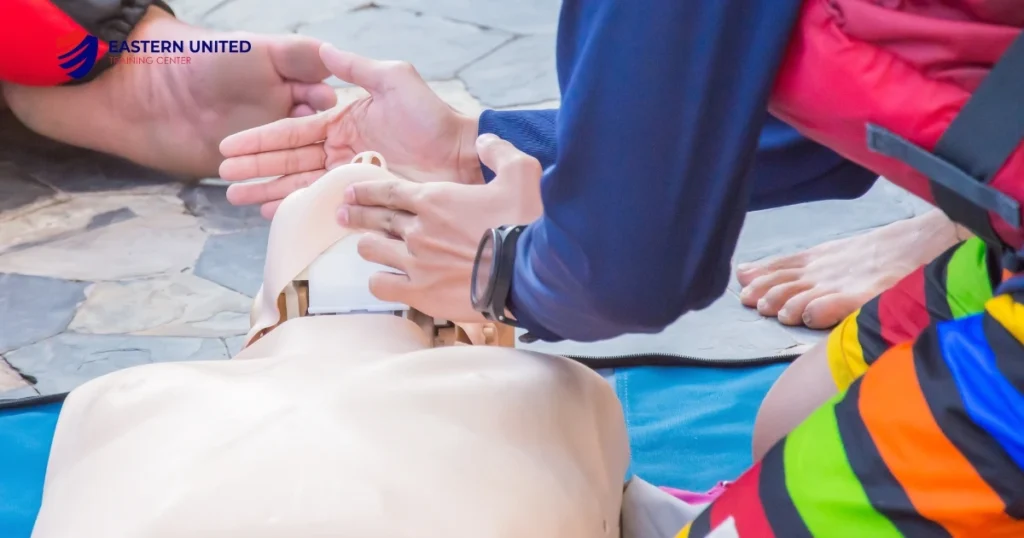
Here, EUTC Global offers first aid and BLS training designed for first responders, healthcare workers, and individuals seeking BLS certification. Our first aid training covers all important life-saving skills, including cardiopulmonary resuscitation (CPR), chest compressions, and rescue breathing to address cardiac troubles, heart attacks, cardiac arrest, and newborn respiratory distress. We provide available classes for both in-person and online BLS certification, ensuring flexibility for all participants. Our first aid certification and CPR certification card are recognized by the American Heart Association (AHA) and the Red Cross, meeting industry standards. Whether you need a CPR course, BLS training, or certification courses, we have options to suit your schedule. Our First Aid and BLS courses are available for all citizens of Saudi Arabia, such as Riyadh, Jeddah, Dammam, and Khobar, or worldwide candidates. fire fighting online course is also available for participants. Our BLS instructor-led training includes basic first aid & cpr, wilderness advanced First Aid, and BLS training KSA through the American Heart Association, highlighting the key differences in protocols. What is BLS? The course teaches proper use of an external defibrillator, recognition of early signs of emergencies, and response to bloodborne pathogens exposure. Participants receive a wallet card upon successful completion, along with training supplies and emergency preparedness supplies. We also offer AHA basic life support online, CPR American Heart certification, and CPR and BLS pediatric training. If you are looking to train in first aid skills or become a BLS life support certification provider, our courses are the perfect fit. Our programs emphasize full capabilities in basic life-saving training, including CPR and newborn procedures. AHA BLS American Heart Association (AHA) Basic Life Support (BLS) training course provides all essential knowledge and skills about life-saving. This is productive for those who want to prepare themselves for emergencies. This will supply practical knowledge about how to use an AED ( Automated External Defibrillator). It also covers CPR (cardiopulmonary resuscitation) for children and infants. In this course, we follow the guidelines of the AHA and focus on high-quality chest compression and rescue breath. This BLS PDF course will enhance your confidence and skills to handle emergencies quickly and safely. After completing training, you will achieve BLS recertification online from our side. After your diploma expires, you can get AHA BLS renewal online just by taking the latest training. An American Heart Association BLS card will also be provided to you. You can search for us by first aid and BLS training near me, BLS course online, or AHA BLS online. To make you interested and tell you the importance of this course, we are also providing a first aid course online for free. basic life support course also improves your professional reputation for industries. EUTC Global also provides the opportunity for BLS recertification online AHA and BLS recertification online in which you can refresh your diploma for the next two years. This process is also known as AHA BLS renewal online. Difference Between First Aid and BLS Course Takers BLS (Basic Life Support) Training – Basic Cardiac Life Support Course Our Basic Life Support training course is a professional CPR certification course that will train you in essential life-saving skills for handling any kind of emergency. It covers high-quality CPR and the use of an Automated External Defibrillator(AED). Our AHA-approved BLS course is ideal and productive for nurses, doctors, and first responders. You can search for our training by basic life support certification near me or basic cardiac life support certification online. The training has hands-on practice and follows the latest AHA basic life support policies. A BLS certification is typically valid for two years. BLS life support certification from our side also increases your professional value to get a job in any hospital or anywhere else. Our diplomas are according to the American Heart BLS recertification and the American Heart Association BLS. We are providing the opportunity for BLS certification online and AHA BLS certification. Basic life support online course is also available for those who have a busy routine. In Saudi Arabia, you will receive an American Heart Association-approved BLS training course according to your needs. First Aid Course First Aid course teaches the skills and knowledge about how to handle medical emergencies until professional help comes. In this training course, we will train you about basic wound care. Treating burns and controlling bleeding in any case of injury. This is helpful for parents, teachers, and workplace employees. When sudden accidents and injuries happen, 1st aid course certification can help you respond quickly. This will also provide confidence to handle the situations in any case of emergency. Aid first aid training also enhances your skills and can be helpful at home or in any public place in case of a crisis. From our side, you will also get free first-aid certification. Cardiopulmonary Resuscitation Cardiopulmonary Resuscitation CPR is a life-saving technique that is effective when someone’s heart stops beating and they do not breathe. In this, the knowledge is involved, like pushing fast and hard on the chest, which is known as chest compressions. This procedure will help to keep blood flowing and give rescue breaths to supply oxygen. Even without medical experience, you can help save lives by learning Cardiopulmonary Resuscitation CPR training. Essential 1st Aid Courses and Basic Life Support Training First aid courses and basic first aid skills training are essential for handling medical emergencies. 1st first aid and BLS training are crucial for handling medical emergencies. These courses teach individuals how to respond effectively in critical situations such as cardiopulmonary resuscitation CPR) and incident injuries. The American Heart Association Basic Life Support course provides life-saving practices for healthcare professionals and the general public. Additionally, first aid and basic life support BLS training ensures that individuals are prepared to assist in cardiac emergencies. To become a certified BLS instructor, one can complete specialized training. CPR and AHA BLS Certification for Life-Saving Skills The CPR American Heart training focuses on high-quality chest compressions and rescue breathing techniques. Specialized courses
Authorized Gas Tester Training
Have you ever considered how workers detect gas and other gas-related issues on a construction site or any work site? An authorized gas tester steps onto an oil rig or construction site, knowing exactly how to identify invisible threats in the air. That’s the power of authorized gas tester training. It’s a vital skill that saves lives every day. At Eastern United Training Centre, we teach you essential skills, such as how to use a portable gas sniffer. We prepare you to face real-world risks like combustible gas leaks, toxic gases, and low oxygen levels with confidence. Why does this all matter? Picture this: cloudy skies over a refinery, workers in PPE, and a faint visual alarm blinking. In this situation, if you aren’t trained, even a small natural gas leak could become catastrophic. At our training centre in Saudi Arabia, our course blends theory with hands-on practice. We cover everything from gas detection basics to advanced tools like the Max XT II detector. Our certification is recognized across the industry. It is valid for three years and allows you to work everywhere. It is globally recognized because we follow all the standards. Whether you’re an expert or a novice, our collaborative learning ensures we study topics like safe systems of work, risk assessment, and even nitrogen purging techniques. Are you ready to join us? Contact us today to get certified! Who is an Authorized Gas Tester? Well, you can think of him as a guardian of safety in high-risk zones. As an authorized gas tester, you will be trained to identify hazards like methane, propane, or low oxygen levels in confined spaces. These gases can be very dangerous in the construction industry. A gas tester is the first line of defence against disasters. You have to use a gas detector and sharp instincts. Did you even know? Even a tiny spark in a flammable environment can cause chaos. Gas testers are in a very important position, and they are the heroes of the workplace. We have to ensure that every permit to work meets strict safety standards. Authorized Gas Tester Course Outline at Eastern United Training Center This course will teach you everything that is required to become an expert gas tester. After this training, you can work as an authorized gas tester anywhere in the world. Here is what we teach: Why Choose EUTC Global Authorized Gas Tester Training KSA? Well, here are some of the benefits: Validity of Certificate Your EUTC Global gas tester course certification is valid for 3 years. It is globally recognized and trusted for oxygen level monitoring. Course Duration We provide 3 days of immersive training: you will learn theory, like gas testing procedures, and practical skills, like confined space drills. Minimum Qualification Basic safety skills (e.g., risk assessment) are enough. You don’t need prior experience. Just a drive to stop hazards. In Summary In the end, I will say that Authorized Gas Tester Training can be a lifesaver for you. It shows how serious you are when it comes to protecting yourself and your team. At Eastern United Training Center in Saudi Arabia, we blend soft skills with technical challenges that will prepare you for the unexpected. We take authorized gas tester responsibility for the workers. So, if you are facing cloudy skies on a rig or a propane leak in a plant, you will learn to stay calm, act fast, and save lives. So, are you ready to join us? Enroll today!
High Pressure Equipment Safety Training
High Pressure Equipment Training is a very important program. This training is specifically made to ensure safety during high-pressure work. This high-pressure work can be cleaning work or handling any pressure systems. But you might think, what exactly is it? Well, I will explain all the things like what pressure is, what a pressure system is, and why pressure system safety is so important. As an expert in high-pressure safety equipment in industry, you will understand how to identify potential risks that come with pressure vessels. You’ll learn why using high-pressure equipment is very safe if you follow all the rules properly. You should promote awareness about these high-risk tasks and learn the ability to operate pressure systems safely. Our blog explores many topics, like training requirements for high-pressure equipment handling and the importance of safe operation of high pressure systems training. You will learn how you can avoid accidents with high-pressure devices. At Eastern United Training Center, you should train with us if you’re an operator, technician, or supervisor in Saudi Arabia. We recommend that everyone whose work is related to high-pressure equipment handling. We focus on topics like high-pressure hazard awareness training and competency training for high-pressure tools. This guide ensures that you will learn how to stay safe and confident in these risky environments. This High Pressure Equipment Training can teach workers how they convert their workplace into a safer and more efficient environment. Introduction of High Pressure Equipment Training & Awareness High pressure systems are everywhere around us. This equipment is widely used in industrial machinery and high pressure cleaners. It plays a very important role in many industries. But remember, with great power comes great responsibility. That’s why we offer High Pressure Equipment Training at Eastern United Training Center. You might be wondering what pressure is, what a pressure system is, and why pressure system safety is so important. Well, this training answers all those questions. This course will make sure that you are trained to do high-pressure tasks. You will be able to use high-pressure equipment safely. You must learn about the risks and the rules if you do high-pressure cleaning work or operate complex machinery. We will tell you everything you need to know about High Pressure Equipment Safety Training. After this detailed training, you will be able to identify potential dangers that are related to pressure vessels. Our course contains topics like the use and maintenance of high-pressure equipment and high pressure washers. Working with high-pressure equipment will become very safe when you have the right knowledge and skills. What is High Pressure Equipment Safety Training KSA? High Pressure Equipment Safety Training is a special program that targets those who work with high-pressure equipment. This course educates students on how they can perform the operations, maintenance, and handling of high-pressure systems. If you work in a manufacturing sector, or your work is related to oil and gas, construction, or healthcare. Then you definitely noticed these types of systems. The thing is, this equipment comes with its own risks. These dangers can be prevented if workers have the right knowledge and skills. This training can train you to understand pressure dynamics and its risks. In this training, we include the safe operation of high-pressure systems training. What Will Be Included in High Pressure Equipment Training? So, EUTC Global specially made this course detailed and interesting. Will you learn a lot of things in this training? After this training, you will be able to handle high-pressure equipment safely. In the end, I just want to say that if you take this training, you’ll not only feel more confident but also earn a High Pressure System Safety Certification. This certificate will prove your expertise. Who Should Take High Pressure Equipment Training? You might be thinking, Is this training for me or not? Well, Eastern United Training Center recommends this training to everybody whose work is related to high-pressure equipment. You might be an engineer, technician, operator, or even supervisor who manages the high-pressure systems. The main thing is it’s not only for professionals. This specialized training program is for everybody who’s curious about entering the field or simply wants to increase one more skill in their CV. This training is a great way to start. After all, safety is everyone’s responsibility, and the more people who are trained, the safer the workplace becomes. Why is High Pressure Equipment Safety Training Important? We all know how dangerous these pressure systems are. Many workers who work with these high-pressure systems don’t know anything about safety. If they are not properly trained, their small mistake can cause accidents, injuries, or even death. Because of this, the importance of heavy equipment safety increases. This course trains you in such a way that you can prevent accidents before they even happen. This is an important investment for your safety and the safety of those around you. So you should join our High Pressure Equipment Operator Safety Course to be a responsible professional in your field. To Wrap It Up At EUTC Global, we always say that, when it comes to high-pressure systems, there’s no room for shortcuts. High Pressure Equipment Training is not ordinary training that you do as a formality. This training is very important, and it can save lives. After this training, you will be able to protect everyone around you. This training helps you to identify potential risks and operate equipment effectively. In case of an emergency, you can use high pressure alarm. Our training has topics like High-Pressure System Safety certification and mastering competency training for high pressure Tools that promote a culture of safety and efficiency. So, we recommend that every worker take our High-Pressure Equipment Safety Training.
Emergency Response Leader Training
Emergency Response Training is specially made to train students on how to act in a workplace emergency as a leader. At Eastern United Training Center, we teach the Basic Emergency Response Team Leader course. This course is ideal for team leaders, especially if you have the additional responsibility of managing emergencies. Whether you want to master the role of an Emergency Response Team Leader or want to learn the responsibilities of an Emergency Response Leader, this course has everything. Our program spans two days with an approximate training ratio of 10% theory to 90% practical. From the Emergency Response Leadership Course to Online Emergency Team Leader Training, we offer a lot of options. You’ll learn the skills to assess situations, use resources, and lead your team confidently during crises. This training is perfect for professionals, community leaders, and workers. Our course has a lot of features like the Crisis Management Leadership Course and Incident Commander Training. After this training, you’ll achieve globally accepted certifications that show your skills. If you live in Saudi Arabia or anywhere else, our program will teach you to handle emergencies effectively. Ready to step up as a leader? Enroll in our basic training emergency response team leader program today and become the leader your team or community needs in times of crisis. Emergency Response Team Training We all know that when some emergencies happen, they bring chaos. But it doesn’t have to, right? Well, it is possible if you could be the person who steps up, takes everything in charge, and leads others to safety. This is exactly what Emergency Response Training will train you to do. This training is planned to teach the students basic safety skills and knowledge about workplace emergencies. By learning, they will be able to effectively respond to any workplace emergency. This training will ensure that you’re ready to manage anything from natural disasters to industrial accidents. If you’re a team leader with a lot of responsibilities for emergency management, then you should definitely do this training. At Eastern United Training Center, our training spans two days with an approximate ratio of 10% theory to 90% practical. After that, you will know the responsibilities of the emergency response team leader training and master crisis communication. Ready to be a leader and lead others to safety. Emergency Response Leader Training is for you. What is Emergency Response Leader Training KSA? Well, have you ever imagined being the person everyone comes to during a crisis? Emergency Response Training trains you for this. It’s a very detailed program that will teach all the participants how they manage emergencies. This emergency can be anything from natural disasters to industrial accidents. In this training, you will be trained to assess this kind of situation and make important decisions. You have to lead your team under pressure. However, it’s not just about theory. Our training often includes real-life simulations, leader role-playing, and hands-on exercises. This will ensure that you’re ready for anything. Key Features of Emergency Response Leader Training So, what makes our Emergency Response Leader Training different from others? Well, these are some standout features: Crisis Management Leadership Course You will learn how to handle high-stress situations with confidence. Many people failed to act properly and didn’t know how to manage these situations. Just because of this, many people die every year in these industries. In this training, we make sure that you will know about every situation you might face if you have an emergency. In this way, you will already know how to lead. Incident Commander Training You will be a commander and know how you save others. It’s not just some duty. It’s a proper responsibility. Your team might be at risk, and you have to save them. You should only be able to do that if you master the art of taking charge and coordinating resources effectively. Disaster Response Leadership Certification If you achieve this certificate, people will know how important you are. They will trust you and remember that they should come to you if something happens. When you gain this recognized credential, it will show your expertise. It adds value to your personality and your career. Emergency Preparedness Leadership Workshop You will learn how you can take action if there is an emergency. In almost all accidents, you can save lives if you can do things quickly and properly. The emergency preparedness training will teach skills of emergency team leadership development and develop strategies to prepare for and prevent emergencies. Emergency Action Plan Leadership Training In this course, we will teach how you can build and lead teams that can respond swiftly and efficiently. Your plan is also very important in these situations. You should create actionable plans that are specific to the emergency learning scenarios. These features ensure that you’re not just learning concepts but also applying them in practical life. Who Should Take Emergency Response Training? You might be wondering if I should take this training or not. Well, if you’re someone who wants help during emergencies by saving lives, then this training is definitely for you: In our courses, your background is not an issue. This training can help you to become the leader of your team. Wrapping Up We all must know that emergencies don’t wait for the perfect moment. You can save lives if you act properly. That’s where Emergency Response Training comes in. This program not only teaches you how to respond; it transforms you into a leader. Your team will rely on you during an emergency. The EUTC Global course has hands-on practice and real-world simulations. We will give you expert guidance, and you’ll achieve the confidence and skills to protect your team in crisis. This training will make a great difference. After this training, you will be more responsible, and you can protect your workplace, community, and loved ones. Don’t wait for the next emergency to come.
Basic Rigging and Lifting Training
This detailed training teaches the essentials of basic rigging training. It is a must for anyone who is involved in heavy load handling. It is created to teach the workers about the technical side of lifting operations. Our training will cover everything from understanding rigging equipment to learning safe lifting practices. In this article, we will help you to understand all the basic principles of rigging and lifting. Lifting and rigging training is created for you if you are a rigger, construction worker, or part of the warehouse staff. This course will make you an expert in rigging and lifting equipment. By this certificate, your company will ensure that you can handle basic lifting and rigging tasks safely. You’ll also get introduced to the tricks and tips of safe rigging and slinging. These techniques will help you in lifting operations. The training program teaches the workers how they do incidental lifting. It will also tell you how proper planning and communication are of great importance in this field. At Eastern United Training Center, we will train your workers on how they can safely secure loads with slings, chain hoists, and other rigging tools. If your workers are trained, you will notice increased productivity and fewer accidents. If you want to make your team more skilled or want to start a career in Saudi Arabia, then you should enroll in Basic Rigging and Lifting Training. About Basic Rigging Training Courses Have you ever wondered how workers lift and move heavy loads safely? Well, basic rigging training is the answer to that. They learn everything before doing these tasks. Whether it’s on a construction site, in a warehouse, or during a large-scale project. This detailed program is created to teach the students about the technical side of lifting operations. After this training, you will learn how you can ensure safety and efficiency at every step. But do you know what exactly it involves, and why it is so important? Basic Rigging Training teaches you how to use rigging and lifting equipment. This equipment includes slings, hoists, cranes, and shackles. Many people think that this is just about handling tools. But this course also teaches you the principles of rigging and lifting. You will learn how you can lift carefully and move heavy objects with precision. This training is made for basic riggers, construction workers, and anyone responsible for moving heavy loads. So, if you’re ready to take your skills to the next level, you should join EUTC Global. What is Basic Rigging and Lifting Training KSA? Basic Rigging & Lifting Training is a specialized program that is designed to explain to the students the fundamentals of safely handling, moving, and securing heavy loads. At Eastern United Training Center, we cover everything about rigging and lifting training. Our training includes learning about rigging equipment and all its techniques. After this course, you will know how to load heavy objects easily. This course acts as a foundation for anyone who wants to work in industries like construction, manufacturing, or logistics. If you don’t have proper training, then the risks of accidents, injuries, or even fatalities in your company can increase significantly. Keep in mind that this training is not just about learning how to use ropes, slings, or cranes. This is how many people think. But this training also emphasizes the importance of planning, communication, and teamwork. After all, lifting heavy objects is rarely a one-person job. So, if you are thinking that the rigging and lifting are so difficult and you can’t do that, then this training is here to simplify it for you. Why is Basic Rigging Training Important? Well, we all know that working with heavy loads is very dangerous. If a worker does these heavy tasks without proper training, then they and their fellow workers might be at risk of accidents, equipment damage, and injuries. This is the reason that we give training for the basic rigging training video. This will teach you how you can maintain proper safety and protect yourself and your fellow workers. Proper basic rigger training also improves efficiency. When you know how to plan the lifting operations correctly, you will save time and resources for your company. What Will Be the Course Outline of Basic Rigging and Lifting Training? Well, our courses are made in a very detailed way. When you join our basic rigging training manual in Saudi Arabia, you will know how you master everything about Rigging and Lifting. By the end of the training, you’ll feel confident in your ability to handle rigging and lifting tasks safely and efficiently. What We’ve Learned Well, in our world, safety and precision can’t be ignored. Basic Rigging and Lifting Training is your complete training from which you can master load handling. EUTC Global will teach you everything, from basic rules of rigging and lifting to getting practical experience using tools. This training will help you to achieve such skills that can tackle any challenge confidently. These trainings are planned to teach delegates about the technical aspects of lifting operations. After this training, you will be able to plan, execute, and oversee lifts safely. If your work is related to rigging and lifting, then training is very important for you. So, we recommend that you invest in our course and lift your career to new heights!
Emergency Preparedness & Response Training
Imagine a day at your workplace. Machines are humming, teams are collaborating, operations are running smoothly, and you are doing your usual job. Suddenly, an alarm blares, indicating a chemical spill. In this situation, panic will occur. So, do your employees know how to react? Well, at Eastern United Training Center, we have a special course called Emergency Preparedness and Response Training. It is not just a course; it will teach you many life-saving skills. You will study how you can navigate hazardous materials, natural disasters, and public health emergencies with precision and care. Why does this even matter? Well, emergencies occur without any warning. Any small negligence can result in fire, flood, or calamity. If we didn’t know how to handle this, then it could escalate risks. In this training program, you will learn to handle potential hazards like man-made disasters or catastrophes. In our program, we give practical knowledge to participants. You will practice real-life scenarios like guiding your colleagues to evacuation routes or containing a mock chemical spill. Our training courses are tailored to Saudi Arabia’s oil and gas industry. We empower everyone, from firefighters to office staff, with first aid, risk management, and emergency planning skills. Join our courses today so that you don’t have to wait for a disaster to strike before learning emergency response. So, join us today to get certified! What is Emergency Preparedness and Response Training KSA? Well, emergency response and preparedness training is very crucial. It prepares you to handle everything from a small worksite injury to a major natural disaster like a sandstorm or flood. You can divide it into two parts: For example, during a public health emergency like a pandemic, this training teaches you how you can properly react to these kinds of situations. You should learn how you can enforce social distancing, sanitize workspaces, and communicate calmly. Many people think disaster preparedness is only for emergency managers. But here at our training center, we teach teachers, engineers, and people from different professions. Benefits of Emergency Preparedness and Response Training at Eastern United Training Center Why train with us? Well, there are many reasons why you should choose us over others. There are many training centres in Al Khobar, but here is what makes us different: Why Choose EUTC Global Over Competitors? When you Google emergency preparedness training, you’ll find countless options. Here’s why we stand out: Well, if you are still unsure? Then ask our student! Ahmed, a safety officer at Aramco, says, “Your emergency response training PPT helped me lead my team during a real gas leak. We evacuated in 3 minutes flat! Course Outline of Preparedness and Response Training We will teach you many things in our training program. This will make you an expert. You will learn things like: We will also teach you many case studies, like how poor emergency planning worsened the 2020 Beirut explosion. Validity of the Certificate Your EUTC Global certification isn’t just a piece of paper. It is proof of your skills and expertise. This three-year certificate aligns with global standards like OSHA and Saudi Arabia’s Civil Defense protocols. As emergency management evolves, many new risks emerge. That’s why we offer refresher courses on hazardous scenarios, chemical spills, disaster planning, emergency response, and risk management. Course Duration Time is precious, so we’ve designed our course for two days. In these two days, we will teach you about potential emergencies, man-made disasters, public health emergencies, emergency plans, mapping, evacuation routes, and emergency situations. Course Certification & Minimum Qualification Well, almost everyone can join this training. The only requirements are: Your globally recognized certificate opens doors in industries like construction, healthcare, and oil and gas. Who Can Enroll in Emergency Preparedness & Response Training? Well, our training is not just for firefighters or emergency managers. Here’s who can benefit: Oil & Gas Workers That’s Literally everyone. You should know about them. After all, 60% of emergencies happen off the clock! Wrapping it Up In the end, I just want to say that Emergency Preparedness and Response Training isn’t just normal training, it’s confidence in a certificate. At Eastern United Training Centre, we don’t just teach what to do. We teach the participants advanced emergency preparedness kit skills. At our training centre, you can learn many important and life-saving skills like dodging chemical spills or calming colleagues during a crisis. So, are you ready to join our next batch and get certified today?