


Contents
- 1 Quick Answer (TL;DR)
- 2 What’s the Difference Between Basic and Advanced Fire Fighting Training?
- 3 Who Should Take Basic Fire Fighting Training (BFFT)?
- 4 Who Needs Advanced Fire Fighting Training?
- 5 Fire Fighting Training Levels in KSA
- 6 Cost Comparison: Basic vs Advanced Training
- 7 How to Choose the Right Training Level
- 8 Frequently Asked Questions
- 8.1 How long does advanced fire fighting training take?
- 8.2 What are the different levels of fire fighting training?
- 8.3 What is the difference between basic and advanced fire fighting training?
- 8.4 How much does fire fighting training cost in Saudi Arabia?
- 8.5 Is basic fire fighting training mandatory for all employees?
- 9 Conclusion
Workplace fires continue to cause thousands of preventable injuries every year. In many cases, the issue is not a lack of safety awareness, but the wrong type of training provided to employees. Organizations often either rely only on basic training or fail to provide advanced training to key personnel responsible for emergency response.
Choosing the correct level of fire fighting training is essential for both workplace safety and regulatory compliance. This guide helps safety managers and HR teams understand the difference between basic and advanced fire fighting training and choose the right option based on job roles.
Quick Answer (TL;DR)
- Basic Fire Fighting Training (BFFT): Required for all employees for awareness, evacuation, and initial response
- Advanced Fire Fighting Training: Required for fire marshals, safety officers, and emergency response teams
- Key Insight: Assigning the wrong training level increases risk and creates compliance gaps
What’s the Difference Between Basic and Advanced Fire Fighting Training?
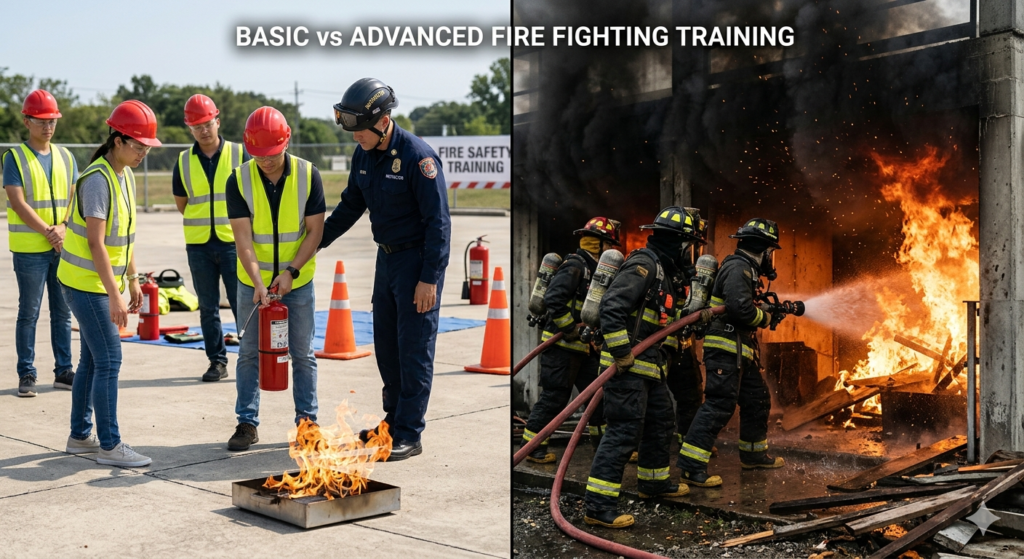
The difference between basic and advanced fire fighting training lies in responsibility and capability, not just course duration.
Basic training focuses on early-stage response and evacuation, while advanced training prepares individuals to actively control fire incidents and lead emergency operations.
Key Differences
| Feature | Basic Fire Fighting (BFFT) | Advanced Fire Fighting |
|---|---|---|
| Target Audience | General workforce | Fire marshals, ERT, safety officers |
| Duration | 1–2 days | 3–5 days |
| Focus | Awareness, evacuation, extinguisher use | Fire suppression, rescue, command |
| Practical Training | Low–moderate | High (live fire exercises) |
| Compliance Role | Baseline requirement | Mandatory for safety roles |
| Cost (KSA) | SAR 400–800 | SAR 1,200–2,500 |
| Refresher | Every 1–2 years | Every 2–3 years |
Who Should Take Basic Fire Fighting Training (BFFT)?
Basic Fire Fighting Training is designed for all employees who are not part of a dedicated emergency response team.
Suitable for:
- Office staff
- Factory workers
- Construction labor
- Facility management teams
- General workforce
What BFFT Covers:
- Types and behavior of fire
- Fire extinguisher classes (A, B, C, D, K)
- Proper use of extinguishers
- Alarm activation procedures
- Safe evacuation techniques
Why It Matters
The purpose of BFFT is not to turn employees into firefighters, but to ensure they:
- Respond quickly in early fire stages
- Avoid making dangerous mistakes
- Support safe and organized evacuation
Organizations that train all employees in BFFT typically experience faster and calmer emergency responses.
Who Needs Advanced Fire Fighting Training?
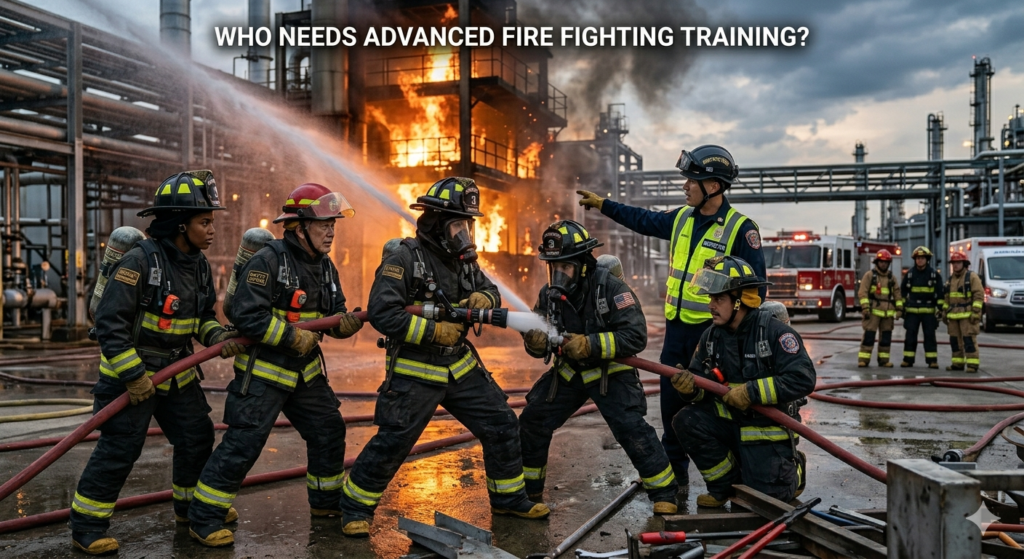
Advanced Fire Fighting Training is essential for personnel responsible for active fire response and emergency management.
Required for:
- Fire Marshals / Wardens
- HSE Officers
- Emergency Response Team (ERT) members
- Site Safety Supervisors
What Advanced Training Includes:
- Breathing apparatus (BA) usage
- Fire suppression techniques (foam, water, dry chemical)
- Live fire drills
- Rescue and casualty handling
- Incident command and coordination
Why Advanced Training is Critical
Basic training alone is not sufficient for roles that involve:
- Managing fire emergencies
- Leading evacuation efforts
- Operating specialized firefighting equipment
Advanced training provides the skills, confidence, and leadership ability needed during high-pressure situations.
Fire Fighting Training Levels in KSA
In Saudi Arabia, fire fighting training follows international safety standards along with local civil defence requirements.
Typical Training Structure
Organizations generally implement a three-level training system:
- Basic Training (BFFT): For all employees
- Advanced Training: For designated safety personnel
- Specialist Training: For industrial emergency response teams
Compliance Requirements
High-risk facilities such as:
- Oil and gas plants
- Construction sites
- Hospitals
- Hotels
are required to maintain trained personnel at different levels. This ensures:
- Faster emergency response
- Improved safety compliance
- Reduced risk during inspections
Cost Comparison: Basic vs Advanced Training
Cost is often a major consideration when selecting training programs.
Average Costs in KSA
- Basic Fire Fighting Training (BFFT): SAR 400–800 per person
- Advanced Fire Fighting Training: SAR 1,200–2,500 per person
Is Advanced Training Worth It?
While advanced training costs more, it offers significantly higher value for roles that require emergency response.
The cost of a single workplace fire incident can exceed the total investment in proper training. Therefore, correct training allocation provides strong return on investment (ROI).
How to Choose the Right Training Level
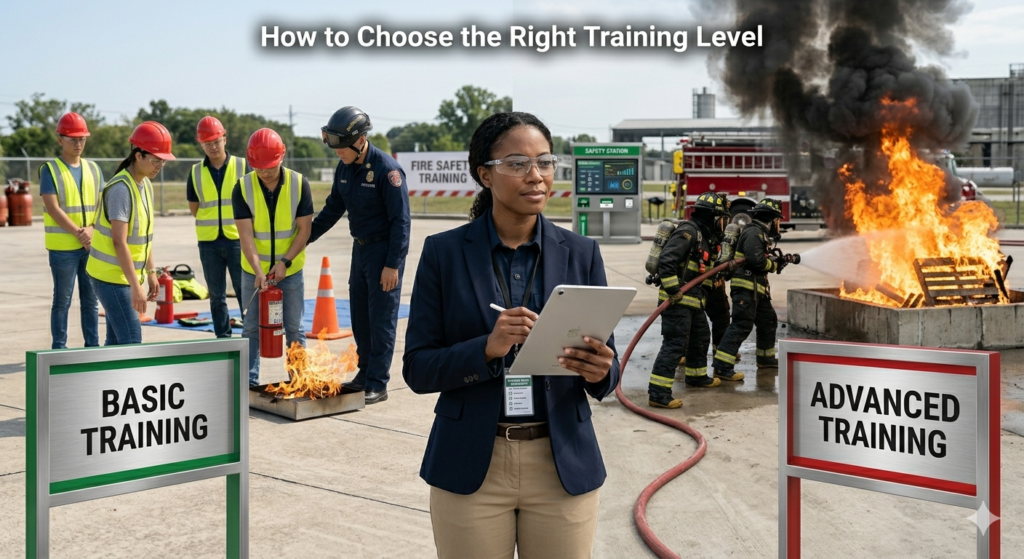
Selecting the correct training level depends on employee roles and responsibilities.
Choose Basic Training if:
- The employee is part of the general workforce
- The role does not involve emergency response
- The goal is awareness and safe evacuation
Choose Advanced Training if:
- The employee is responsible for fire safety
- The role includes emergency response duties
- The workplace is high-risk or regulated
A balanced, role-based training approach ensures both safety and cost efficiency.
Frequently Asked Questions
How long does advanced fire fighting training take?
Advanced fire fighting training typically takes between 3 to 5 days, depending on the provider and course structure. Most programs include both classroom learning and practical sessions such as live fire drills and breathing apparatus training.
What are the different levels of fire fighting training?
Fire fighting training is divided into three levels: basic training (BFFT) for all employees, advanced training for safety personnel, and specialist training for industrial emergency response teams.
What is the difference between basic and advanced fire fighting training?
Basic training focuses on awareness, evacuation, and extinguisher use, while advanced training focuses on fire suppression, rescue operations, and incident management. The key difference is awareness versus active response capability.
How much does fire fighting training cost in Saudi Arabia?
Basic training costs between SAR 400–800, while advanced training ranges from SAR 1,200–2,500 per person, depending on course content and provider.
Is basic fire fighting training mandatory for all employees?
Yes, in most workplaces—especially high-risk environments—basic fire fighting training is considered mandatory. All employees must understand fire safety procedures, not just designated fire marshals.
Conclusion
Choosing between basic and advanced fire fighting training is not simply a budgeting decision—it is a critical safety strategy based on job roles.
Basic Fire Fighting Training should be provided to all employees to ensure they can respond quickly, reduce panic, and evacuate safely during emergencies. It creates a strong safety foundation across the entire workforce.
Advanced Fire Fighting Training is essential for personnel responsible for managing fire incidents, including fire marshals, safety officers, and emergency response teams. These roles require practical skills, technical knowledge, and leadership abilities to handle real-life emergencies effectively.
The most effective approach is a tiered training system, where:
- All employees receive basic training
- Designated personnel receive advanced training
This ensures better preparedness, reduces workplace risks, and supports compliance with safety regulations.
In the end, the goal is simple: provide the right training to the right people, so your organization is fully prepared to respond when it matters most.