


Contents
- 1 What Is OSHA Training Anyway?
- 2 OSHA 10: The Foundation for Frontline Workers
- 3 OSHA 30: Deep Dive for Supervisors and Safety Leaders
- 4 The Key Differences Side-by-Side
- 5 Does OSHA 30 Cover Everything in OSHA 10?
- 6 Do You Need OSHA 10 Before Taking OSHA 30?
- 7 When OSHA 30 Is Actually Worth It
- 8 OSHA Training Levels: What About OSHA 40?
- 9 Practical Considerations Before You Enroll
- 10 Making Your Decision: A Simple Framework
- 11 How to Get Started with Quality Training
- 12 Final Thoughts: Safety Training That Actually Matters
- 13 Frequently Asked Questions
You just landed a construction job, and your boss says, Get your OSHA card. But which one?
The 10-hour? The 30-hour? Does it even matter?
If you’re standing at this crossroads, you’re not alone. Every year, thousands of workers face the same question. The difference between OSHA 10 and OSHA 30 isn’t just about time—it’s about your role, your career goals, and what you’ll actually do on the job.
Let’s break down what these trainings actually cover, who needs which one, and how to make the smartest choice for your situation.
What Is OSHA Training Anyway?
Before comparing the two, here’s the foundation: OSHA (Occupational Safety and Health Administration) runs an Outreach Training Program that teaches workers how to recognize hazards and stay safe on construction sites and in general industry workplaces.
These aren’t mandatory federal requirements for all workers. Instead, employers often require them, and some states make them mandatory for certain jobs. Think of them as safety education that proves you know the basics—or the advanced stuff—of workplace protection.
Both programs give you a Department of Labor (DOL) card after completion. That card shows employers you’ve been trained, but it’s not technically a “certification”—it’s proof of training completion.
OSHA 10: The Foundation for Frontline Workers
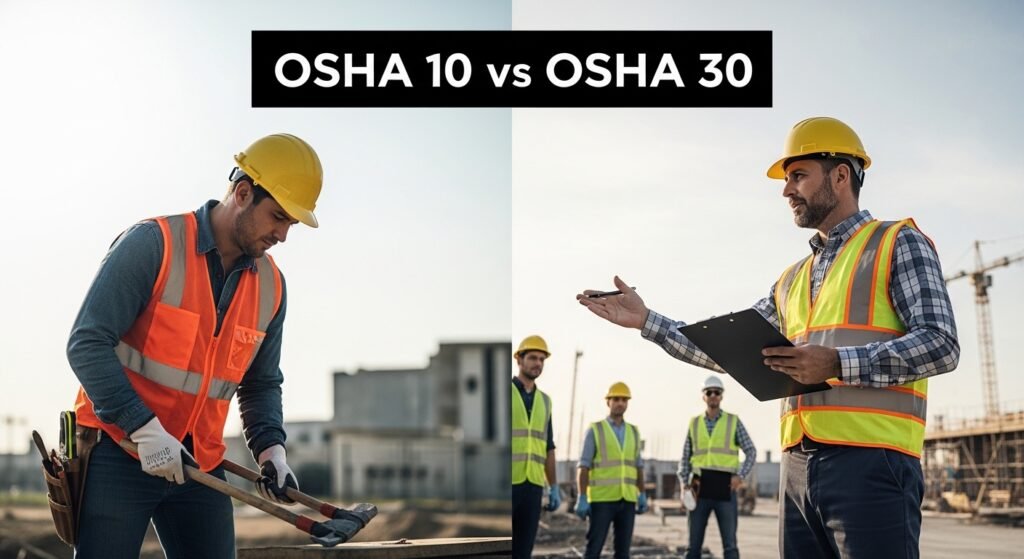
The OSHA 10-hour course is designed for entry-level workers who spend their days on job sites doing the actual hands-on work.
What You’ll Learn:
The course covers fundamental hazard recognition across 6-7 mandatory hours, including:
- Personal protective equipment (PPE) basics
- Fall protection and ladder safety
- Electrical hazards
- Caught-in and struck-by dangers
- Your rights as a worker
The remaining hours cover elective topics chosen by your instructor, like scaffolding safety or hand tool hazards.
Who Should Take OSHA 10?
This training makes sense if you’re:
- Just starting in construction or general industry
- Working as a laborer, apprentice, or crew member
- Required by your employer or state to have basic safety knowledge
- Looking to boost your resume with recognized safety awareness
For example, if you’re framing houses, running electrical wire, or operating basic equipment, OSHA 10 gives you the awareness to spot risks before they become accidents.
The Reality Check:
OSHA 10 won’t make you a safety expert. You’ll know enough to protect yourself and recognize when something feels wrong, but you won’t learn to manage safety programs or conduct inspections. It’s awareness training, not leadership development.
One common frustration: the course takes about two full workdays (you can only complete 7.5 hours per day maximum), and you must finish within 6 months of starting.
OSHA 30: Deep Dive for Supervisors and Safety Leaders
The OSHA 30-hour course triples your training time—and dramatically expands what you learn.
What Makes It Different?
OSHA 30 includes everything in OSHA 10, then goes much deeper. You’ll cover:
- All the basic hazards from OSHA 10
- Management responsibilities for safety
- How to conduct site inspections
- Accident investigation fundamentals
- Safety program development
- More comprehensive elective topics
The extra 20 hours aren’t just “more of the same.” They shift focus from personal awareness to team management and regulatory compliance.
Who Benefits Most from OSHA 30?
This course is built for:
- Foremen, supervisors, and site managers
- Safety coordinators or officers
- Workers being promoted to leadership roles
- Anyone responsible for others’ safety on the job
If you’re the person checking scaffolding before your crew uses it, running safety meetings, or documenting near-misses, OSHA 30 gives you the knowledge base you need.
A Real-World Example:
Imagine you’re promoted from carpenter to crew lead. Suddenly you’re not just keeping yourself safe—you’re responsible for ensuring five other workers follow protocols, use PPE correctly, and understand site-specific hazards. OSHA 30 prepares you for those conversations and decisions OSHA 10 simply doesn’t address.
The Commitment Required:
OSHA 30 typically takes 3-4 days to complete, whether online or in-person. That’s a significant time investment, and some workers wonder if it’s worth it.
The answer depends entirely on your role. For supervisors, it’s often non-negotiable. For entry-level workers, it’s usually overkill.
The Key Differences Side-by-Side
Here’s how they stack up in practical terms:
| Aspect | OSHA 10 | OSHA 30 |
| Duration | 10 hours (about 2 days) | 30 hours (about 3-4 days) |
| Target Audience | Entry-level workers, laborers, crew members | Supervisors, foremen, safety personnel |
| Content Depth | Basic hazard awareness and worker rights | Comprehensive safety management and regulatory knowledge |
| Cost Range | Generally $60-$80 | Typically $200-$300 |
| Who Requires It | Often mandated by employers or states for job site access | Usually required for supervisory positions |
Does OSHA 30 Cover Everything in OSHA 10?
Yes, completely.
OSHA 30 includes all the content from OSHA 10, plus the additional 20 hours of advanced material. This means if you complete OSHA 30, you don’t need OSHA 10—it’s fully covered.
Some workers worry they need both cards. You don’t. OSHA 30 serves as a complete substitute for OSHA 10 requirements.
Do You Need OSHA 10 Before Taking OSHA 30?
No prerequisites exist for either course.
You can jump straight into OSHA 30 if it suits your role, even as a complete beginner. However, most workers follow this natural progression:
- Start with OSHA 10 in entry-level positions
- Gain field experience
- Take OSHA 30 when promoted to supervisory roles
That said, if you know you’re headed toward management, starting with OSHA 30 saves time and money versus taking both separately later.
When OSHA 30 Is Actually Worth It
Let’s be honest about value. OSHA 30 costs more and takes more time. Here’s when that investment pays off:
You’re Already in or Moving Toward Leadership:
If you supervise others, OSHA 30 isn’t optional—it’s essential. The deeper regulatory knowledge and management focus directly apply to your daily responsibilities.
Your Resume Needs a Boost:
For job seekers targeting safety coordinator, foreman, or project manager roles, OSHA 30 signals serious commitment. It shows employers you understand both worker safety and management accountability.
Your Employer Requires It:
Some companies mandate OSHA 30 for anyone in a supervisory track. Check your company’s requirements before enrolling.
When OSHA 10 Is Enough:
If you’re working as a laborer, operator, or crew member with no supervisory duties, OSHA 10 covers what you need. The extra 20 hours won’t change your daily work or significantly boost your earning potential in non-leadership roles.
OSHA Training Levels: What About OSHA 40?
Occasionally, you’ll hear about “OSHA 40” or wonder about additional levels.
Here’s the clarification: OSHA’s Outreach Program only offers 10-hour and 30-hour courses. There’s no official “OSHA 40” in this program.
When people mention 40-hour training, they’re usually referring to specialized programs like HAZWOPER (Hazardous Waste Operations and Emergency Response), which is a completely different training focused on handling hazardous materials.
The progression is simple:
- OSHA 10: Entry-level awareness
- OSHA 30: Supervisory and advanced knowledge
- Specialized trainings: Add-ons for specific hazards (confined spaces, fall protection, etc.)
Don’t overthink it. For most construction and general industry workers, the choice is between 10 and 30 based on your role.

Practical Considerations Before You Enroll
Training Format:
Both courses are available online or in-person through OSHA-authorized trainers. Online offers flexibility, but you’re limited to 7.5 hours of training per day, and you must complete the course within 6 months of starting.
In-person training often happens over consecutive days, which some workers prefer for focus and immediate card completion.
Your DOL Card:
After completing either course, you’ll receive a temporary card from your training provider immediately. Your official DOL card arrives later by mail and serves as your permanent proof of training.
Be aware of fraudulent cards. Only take courses from authorized OSHA trainers—verify credentials before paying.
Expiration and Renewals:
OSHA cards don’t expire at the federal level, but some states and employers require renewal every few years. Check your state’s specific requirements to avoid surprises.
If your card is lost, you can request a replacement by contacting your training provider with details like trainer name and completion date.
Making Your Decision: A Simple Framework
Ask yourself these questions:
- What’s my current role? Entry-level workers typically need OSHA 10; supervisors need OSHA 30.
- Where am I headed? If promotion is on the horizon, OSHA 30 prepares you for the transition.
- What does my employer require? Always check company policy first—they might mandate one or the other.
- What does my state require? Some states have specific requirements for job site access.
- What’s my budget and time availability? OSHA 30 costs and takes more time but offers greater depth.
How to Get Started with Quality Training
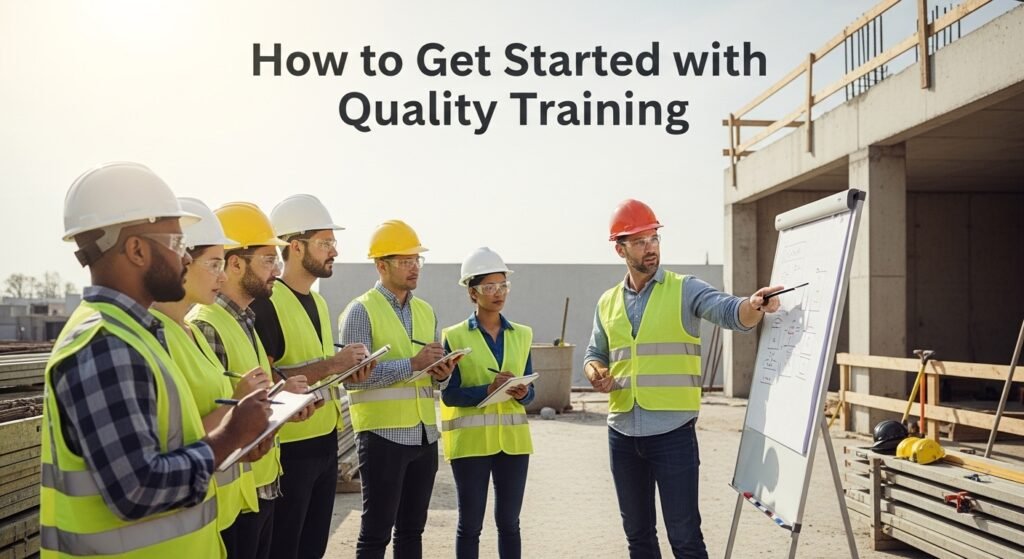
Once you’ve decided which course fits your needs, finding authorized training is crucial.
Quality providers offer flexible scheduling, experienced instructors, and proper authorization from OSHA. Organizations like EUTC Global provide OSHA 30-hour training with both online and in-person options, ensuring you get comprehensive, compliant education that employers recognize.
Look for providers who:
- Are OSHA-authorized trainers
- Offer completion within 6 months
- Provide both temporary and official DOL cards
- Include practical, real-world examples in their curriculum
- Support you if questions arise after completion
Final Thoughts: Safety Training That Actually Matters
Choosing between OSHA 10 and OSHA 30 isn’t complicated once you understand your role and goals.
OSHA 10 gives frontline workers the awareness they need to work safely and meet basic employer requirements. OSHA 30 equips supervisors and safety leaders with the comprehensive knowledge to protect entire teams and manage compliance.
Neither training guarantees you’ll never face workplace hazards. But they give you the foundation to recognize risks, speak up when something’s wrong, and contribute to a safer work environment.
If you’re just starting out, OSHA 10 gets you in the door. If you’re leading others or want to advance, OSHA 30 sets you apart.
Whatever you choose, commit to applying what you learn. The real value of safety training shows up when you prevent the accident that never happens—and that’s worth far more than any card in your wallet.
Frequently Asked Questions
Is OSHA 30 harder than OSHA 10?
OSHA 30 isn’t “harder” in terms of difficulty—it’s more comprehensive. The material builds on OSHA 10 basics and adds management-level topics like inspections and safety program oversight. If you can handle OSHA 10, you can handle OSHA 30; it just requires more time and attention to deeper regulatory content.
Should I get OSHA 10 and OSHA 30?
No need for both. OSHA 30 includes all OSHA 10 content, so completing OSHA 30 covers everything. If you’re in an entry-level role now but expect promotion soon, you can skip OSHA 10 and go straight to OSHA 30 to save time and money later.
Does OSHA 30 look good on a resume?
Absolutely, especially for supervisory, foreman, or safety-related positions. It demonstrates advanced safety knowledge and leadership readiness that employers value. For entry-level positions, OSHA 10 is sufficient, but OSHA 30 signals you’re serious about career advancement.
What does OSHA 10 allow you to do?
OSHA 10 doesn’t “authorize” specific tasks—it’s awareness training. However, many employers and job sites require it for site access, making it a practical necessity for getting hired and working legally on many construction projects. It shows you understand basic hazards and safety protocols.
Do you need OSHA 10 to get OSHA 30?
No prerequisite required. You can take OSHA 30 first, even with zero prior safety training. Most workers naturally progress from OSHA 10 to OSHA 30 as they gain experience and move into supervisory roles, but starting with OSHA 30 is perfectly acceptable if it matches your job requirements.